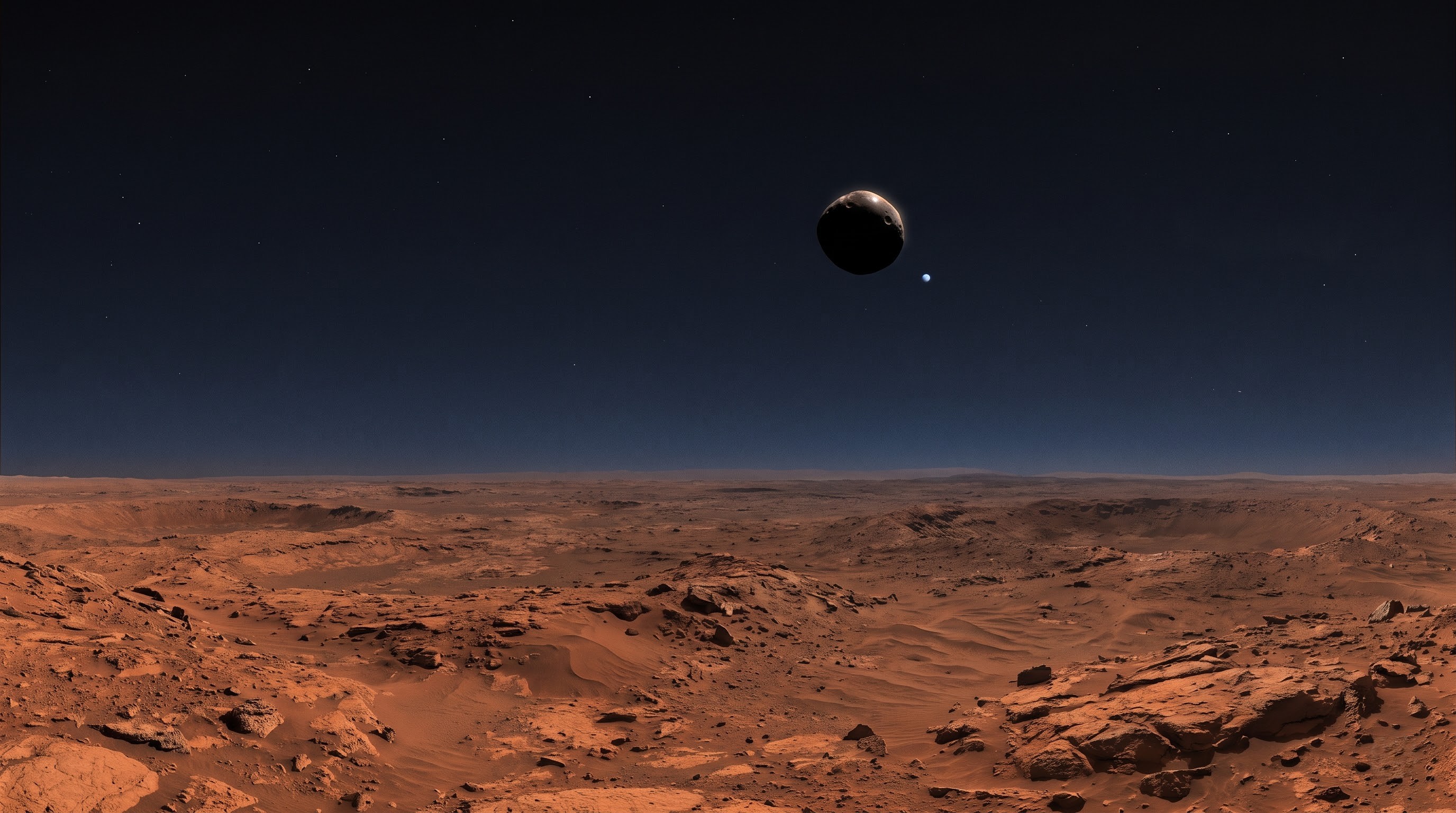
A NASA rover watched Earth disappear from Mars
A single pixel of light, 195 million miles from home, blinking out behind a moon the size of a small city.
From the surface of Mars, nearly 195 million miles away, NASA’s Perseverance rover watched Earth shrink to a single point of light, then vanish completely behind Phobos, one of Mars’ tiny, lumpy moons. Somewhere in that fading dot was every person who has ever lived. Every city, every ocean, every memory anyone has ever had. It’s a strange feeling, seeing home become invisible.
This did not happen in a movie or a simulation. It happened on July 2, 2026, the 1,907th Martian day of Perseverance’s mission, and it marks the first time in history that a camera sitting on the surface of another planet has recorded Earth disappearing behind an object.
A Planet Reduced to a Pixel
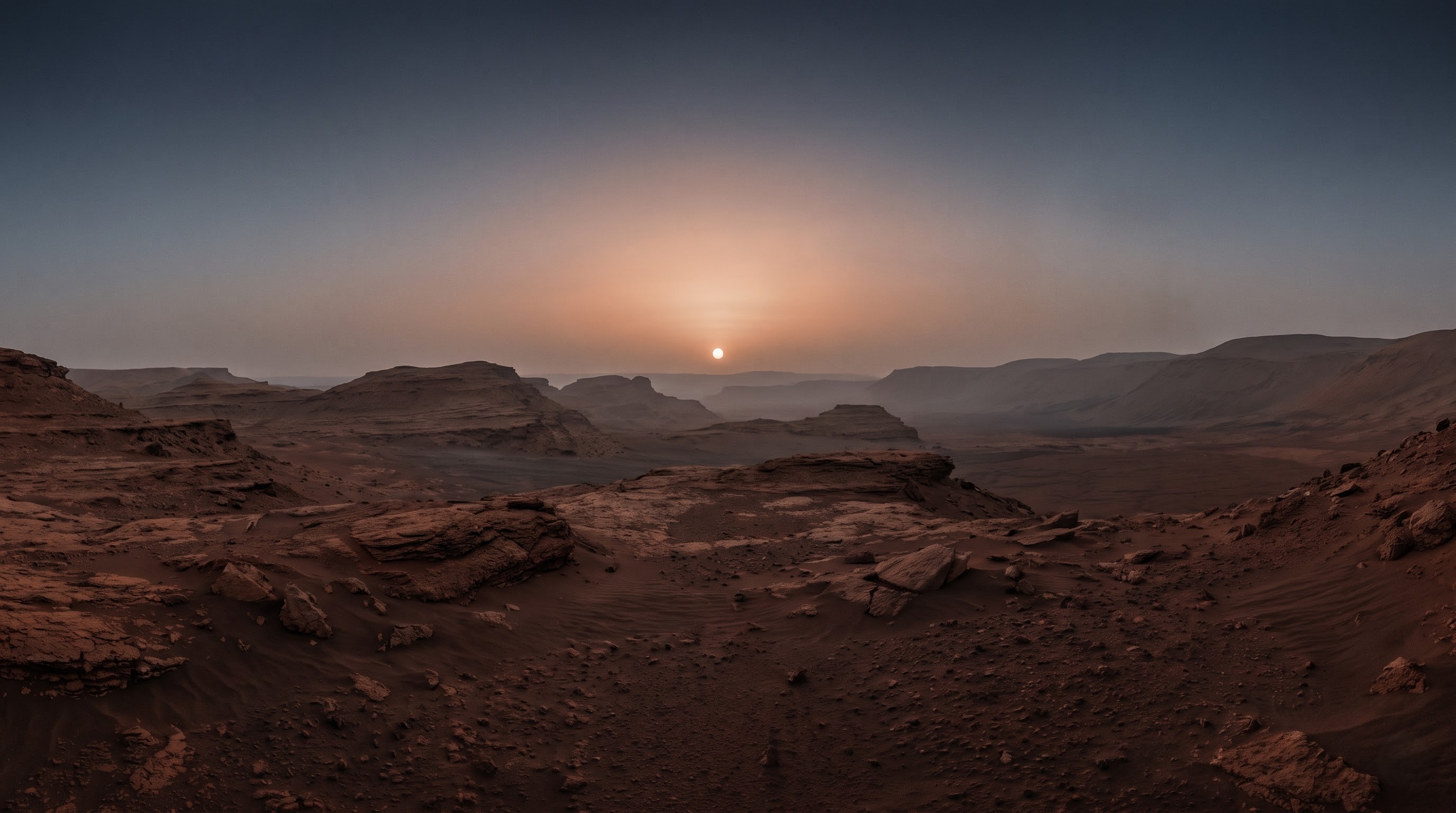
At around 7 p.m. local solar time, the rover pointed its Mastcam-Z cameras toward the evening sky above Jezero Crater. Mastcam-Z is Perseverance’s pair of zoomable, high-resolution cameras, mounted about 24 centimeters apart on the rover’s mast so it can also produce stereo images. That evening, the team wasn’t looking at rocks or sediment. They were looking up.
Earth appeared as nothing more than a faint point of light drifting across the frame. From that distance, our entire planet, its oceans, mountains, and eight billion people, couldn’t be resolved into anything more than a single glowing pixel. Moving in from the opposite direction was Phobos, the larger and closer of Mars’ two small moons, an irregular, potato-shaped rock roughly 17 miles across.
Over a sequence of images, the two objects converged. Earth drifted from the upper left of the frame toward the lower right, while Phobos swept in from the lower left toward the upper right. Then, for a few brief moments, the paths crossed. Earth slipped behind the shadowed edge of the little moon and disappeared entirely.
Not an Eclipse, an Occultation
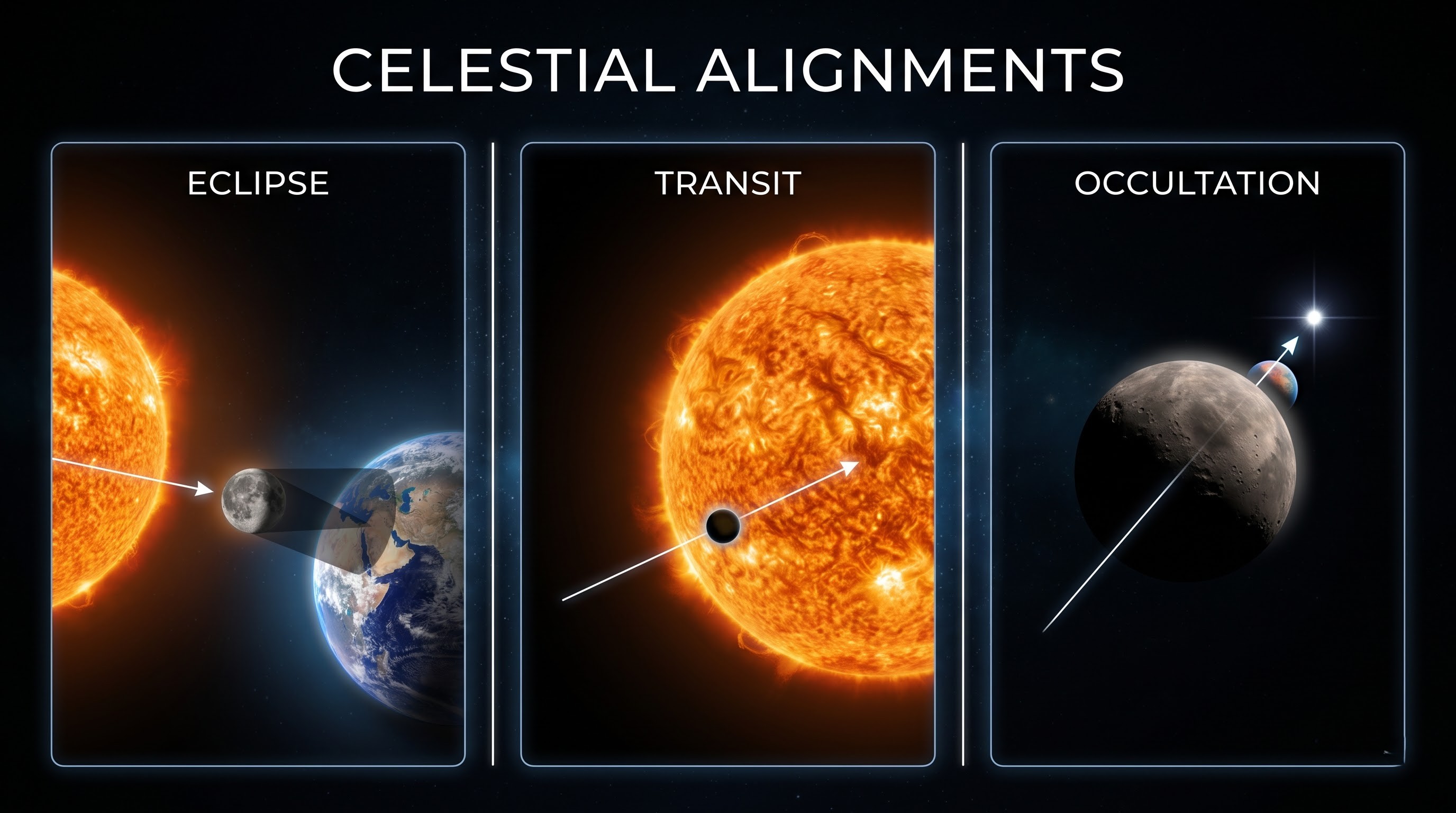
It’s tempting to call this a “Martian eclipse,” and in fact Perseverance photographed a real one less than two weeks earlier, when Phobos passed directly in front of the Sun. But astronomers are precise about their vocabulary, and what happened on July 2 was technically something else: an occultation.
An occultation happens when a closer object appears large enough in the sky to completely hide a more distant one from view. It’s different from a transit, where a smaller foreground object crosses the face of a larger one without covering it, and different again from an eclipse, where an object passes into another’s shadow. Here, Phobos simply lined up along Perseverance’s line of sight and blocked Earth from view, the same way the Moon occasionally hides a distant star or planet when viewed from our own backyard.
Why It Took Planning and Luck
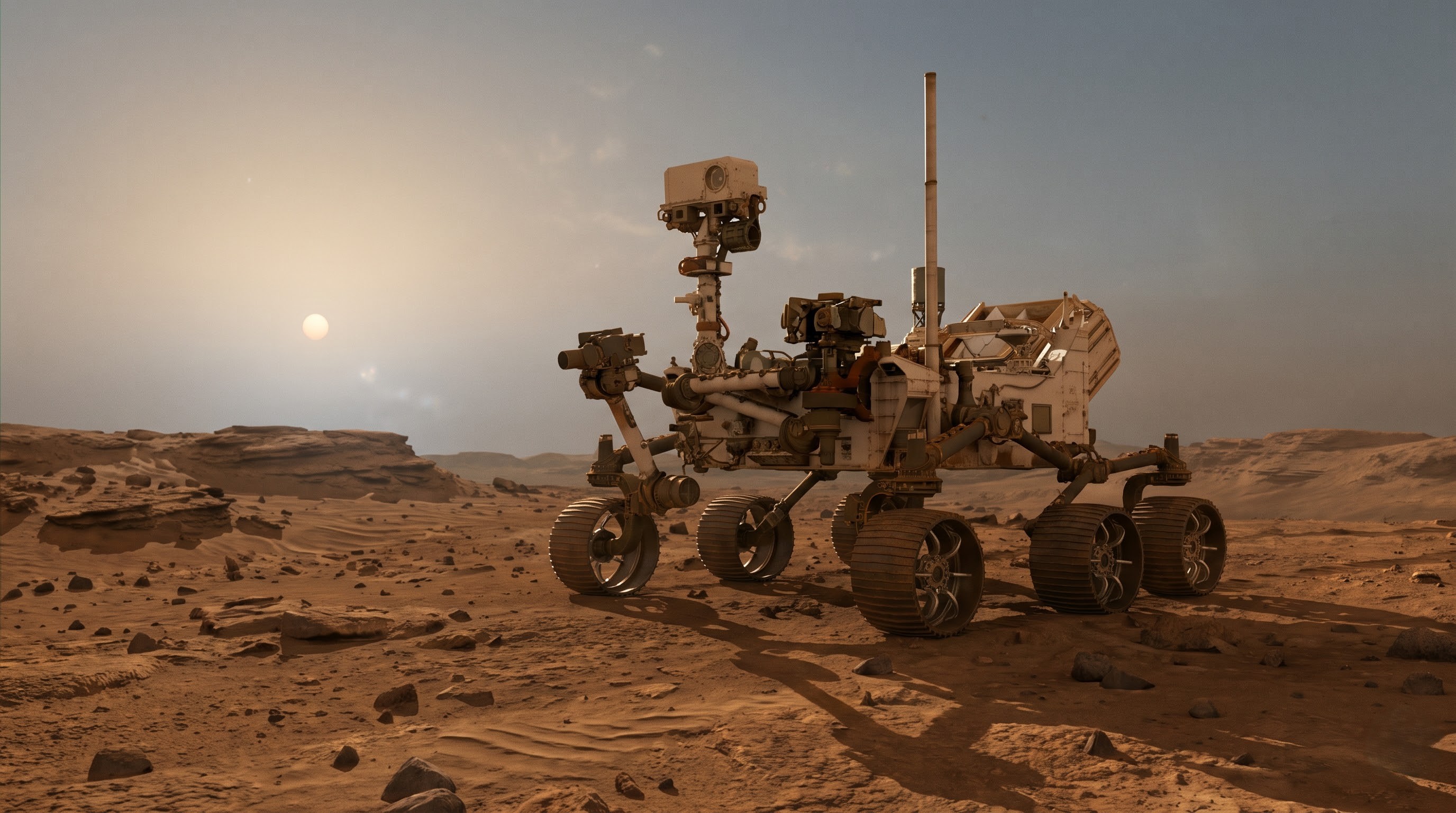
Catching this moment wasn’t an accident. Phobos races around Mars so quickly that it crosses the Martian sky roughly three times a day, while Earth stays visible from Mars for months at a stretch. Lining the two up required careful timing.
As Mark Lemmon, a Mastcam-Z co-investigator at the Space Science Institute, explained, catching one body “directly behind the other takes planning and a little luck.” The team had to predict exactly when Phobos’s fast, low orbit would carry it across the same patch of sky where Earth happened to be sitting that evening, then have Perseverance ready and pointed at precisely the right second.
The result, according to Justin Maki, Mastcam-Z’s deputy principal investigator at NASA’s Jet Propulsion Laboratory, is effectively a self-portrait of our planet taken from the surface of another world, “with a Phobos photobomb” thrown in for good measure.
A Pale Blue Dot, Reduced Even Further
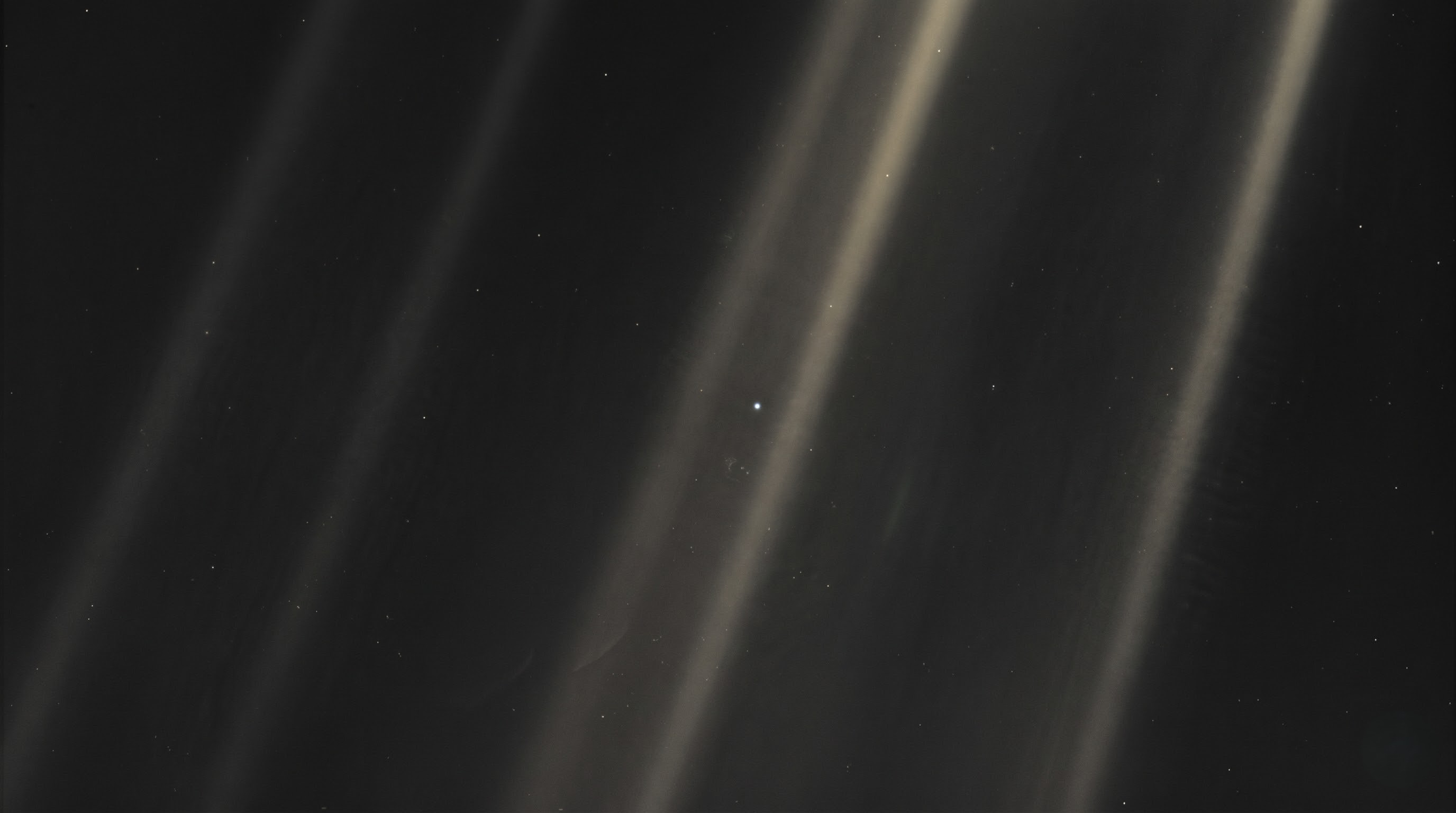
There’s an obvious echo here of Voyager 1’s famous 1990 “Pale Blue Dot” photograph, taken from roughly 3.7 billion miles away as the spacecraft looked back on its way out of the solar system. That image showed Earth as a tiny speck suspended in a sunbeam, and it became one of the most quoted pieces of space photography ever taken, a humbling reminder of how small our world looks from a distance.
Perseverance’s photograph is a different kind of humbling. It wasn’t taken by a spacecraft speeding away into the void, but by a machine standing still on the ground of another planet, doing its job, when it happened to look up and catch our entire species blinking out of view for a few seconds behind a moon most people will never see with their own eyes.
Why This Moment Matters
This was, NASA says, the first time a camera on the surface of another planet has recorded Earth disappearing behind an object. Orbiting spacecraft and telescopes have captured other kinds of occultations before, but never one witnessed from solid ground on a different world.
It’s also, quietly, a reminder of scale. Mars sits an average of roughly 140 million miles from Earth, and on July 2 the distance between the two planets had stretched to nearly 195 million miles. At that range, our home planet isn’t a blue marble. It’s a single point of light, no different in appearance from a distant star, until, for a moment, it isn’t there at all.
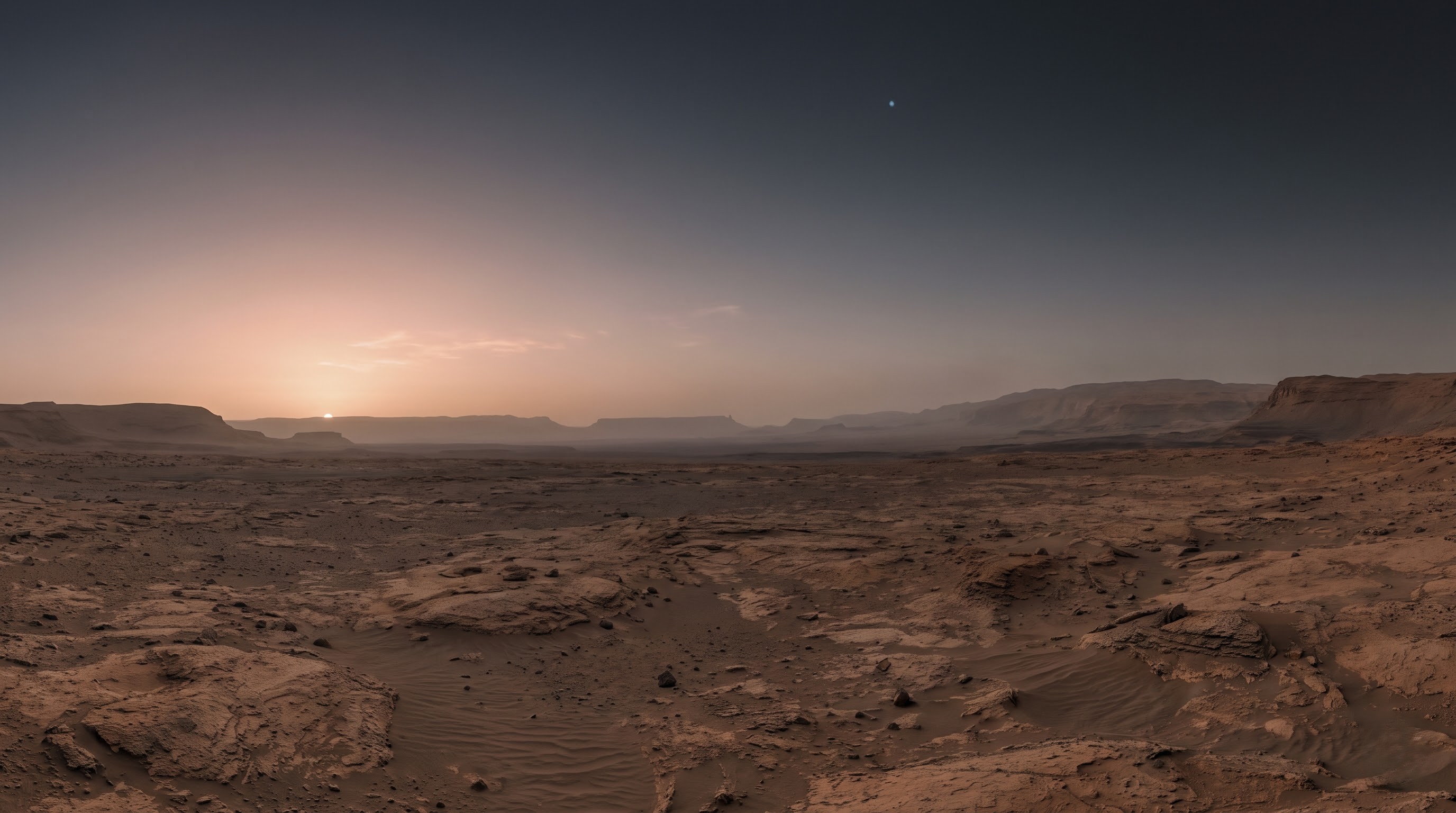
Somewhere in that vanishing point of light was every person who has ever lived, every argument, every sunrise, every small ordinary Tuesday. For a few seconds, from the surface of another planet, all of it disappeared behind a lump of rock the size of a city. Then Phobos moved on, and Earth reappeared, exactly where it had always been.