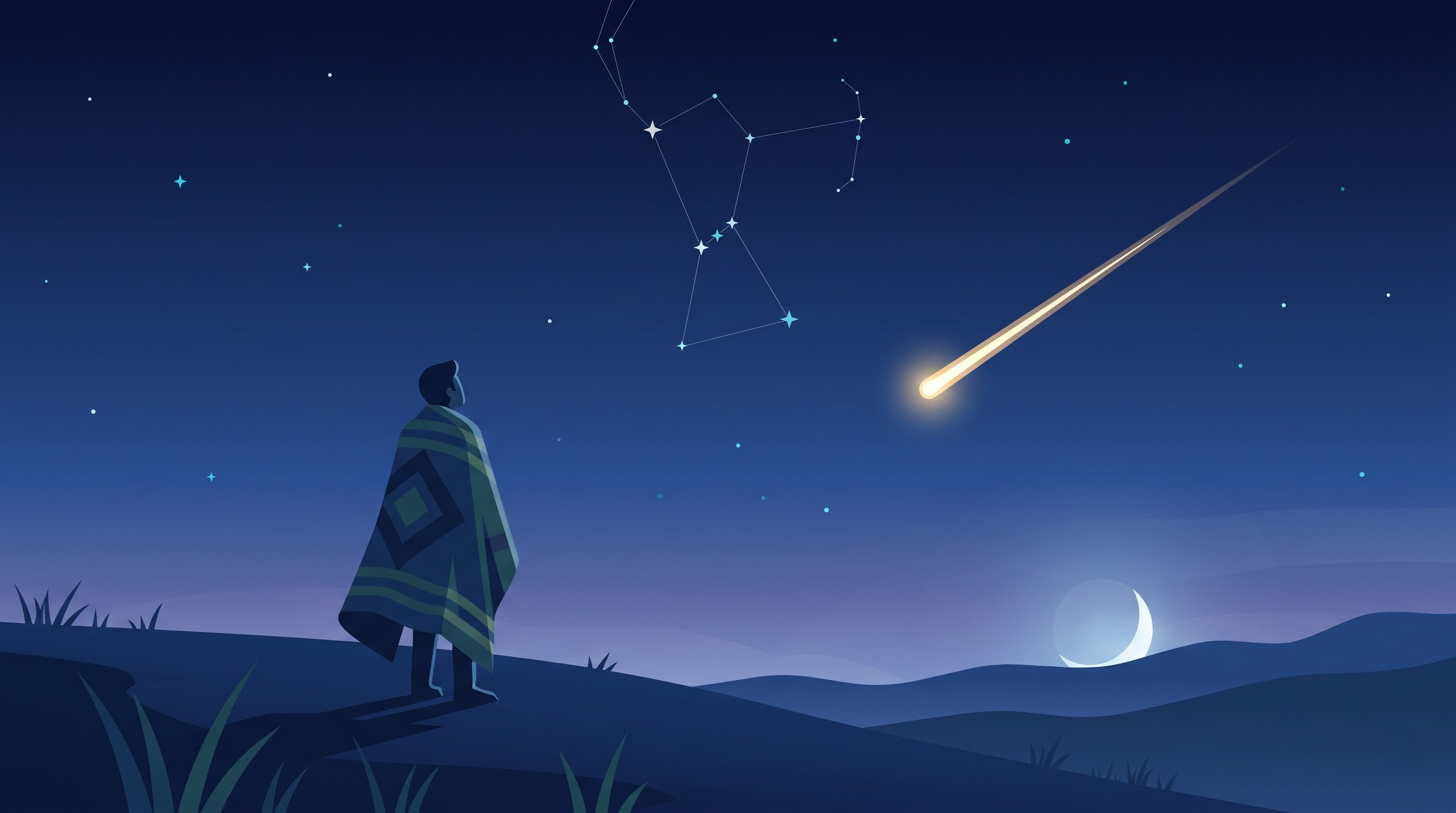
Orionid Meteor Shower 2026: Best Time to Watch (Moon Guide)
The Orionids peak October 21-22, but a bright Moon is up for most of the night. Here is when it sets, and how to see the shower in the dark hours before dawn.
The good news is that it sets in the early hours. That leaves roughly two and a half hours of properly dark sky before dawn, right when Orion is high. That window is your best chance.
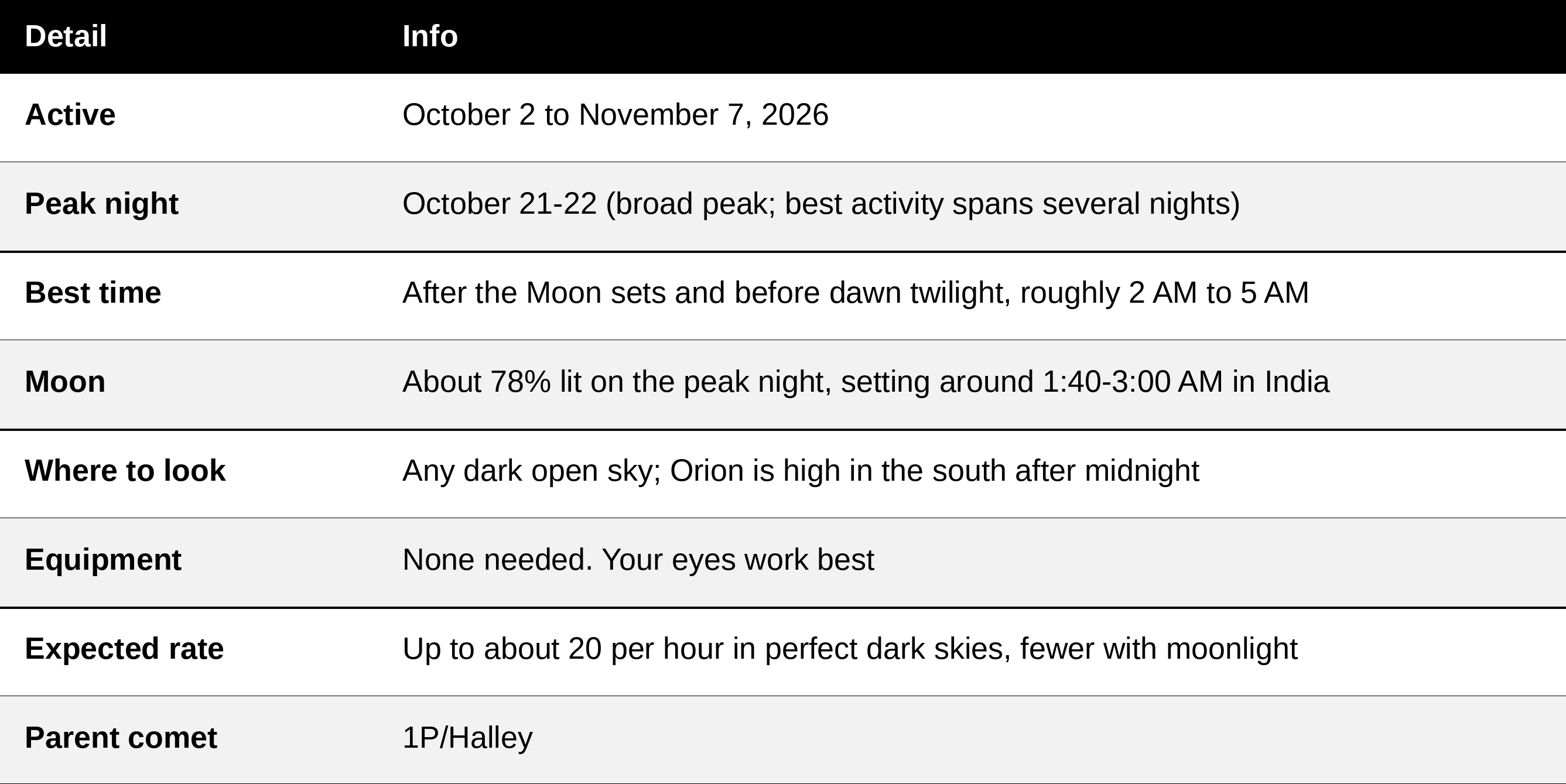
Keep your expectations modest. In perfect conditions the Orionids give up to about 20 meteors an hour, and with moonlight you will see fewer. Clouds and city lights matter just as much.
What are the Orionids?
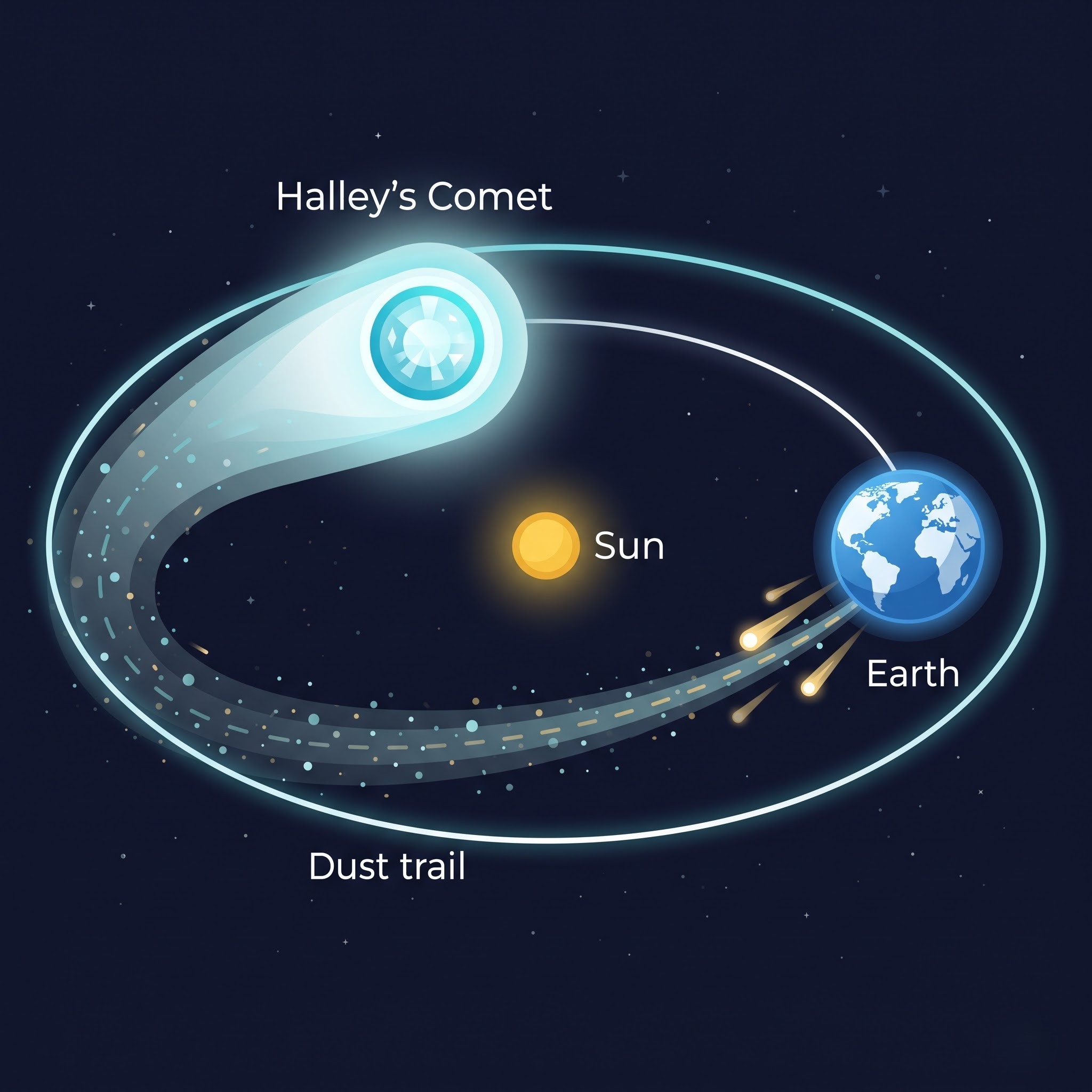
Every October, Earth drifts through a trail of dust left behind by Halley’s Comet. The comet itself only visits every 75-76 years, but its dust stays in orbit, so we get a free reminder every year.
The meteors seem to come from the constellation Orion, which is why they are called the Orionids. They are fast, so expect quick streaks, and the shower sometimes produces a bright fireball. The same comet also causes the Eta Aquariids in May.
When should you watch?
The shower runs from October 2 to November 7, and the peak is broad. Activity stays good for several nights around October 21-22. One prediction (American Meteor Society) puts the maximum at 06:54 UTC on October 23, which is 2:54 AM EDT and 12:24 PM IST. That is daytime in India, so it doesn’t change your plan.
Because of the Moon, the best time is after moonset and before dawn twilight. For most Indian cities that is roughly 2 AM to 5 AM.
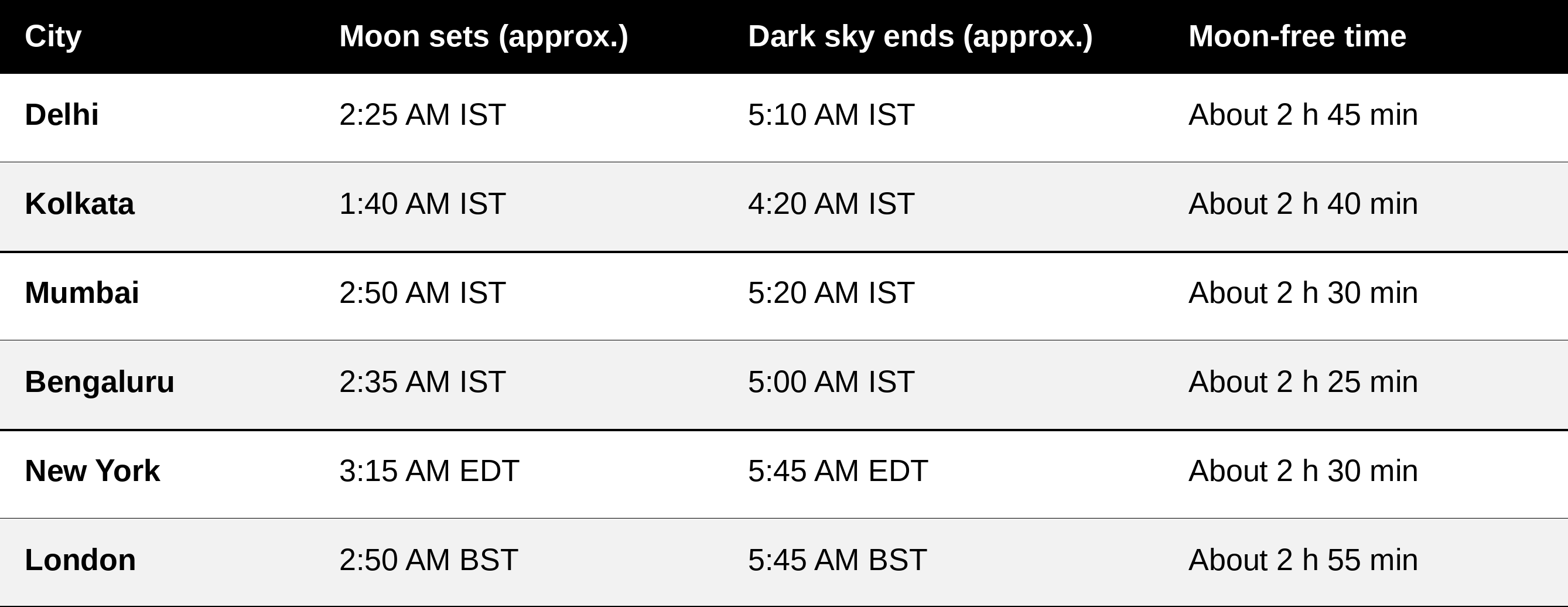
These times are approximate, so check moonset for your own city. One tip: the Moon sets about an hour later each night. By October 23-24 it stays up almost until dawn. If you can, go out on the mornings of October 20-21 or 21-22, when you get a longer dark window.
Where should you look?
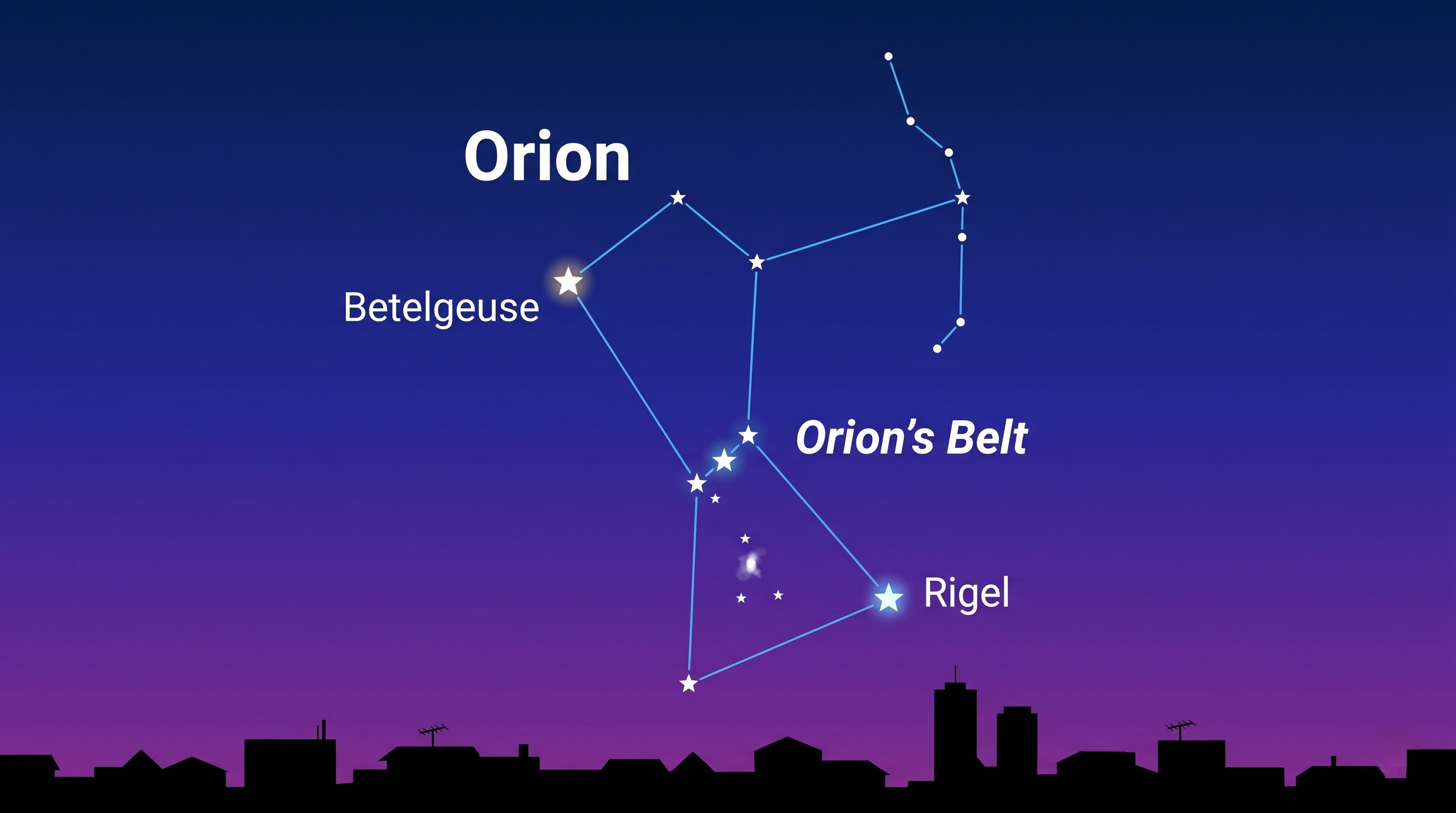
Orion rises around 10 PM and climbs through the night, so after midnight it is high in the sky. You don’t need to find it. Meteors can appear anywhere.
NASA suggests lying flat on your back, with your feet pointing southeast if you’re in the Northern Hemisphere (northeast in the Southern Hemisphere), and looking up at as much sky as you can. Looking 45-90 degrees away from Orion makes the trails look longer. This year, also keep the Moon out of your view. Put a building or tree between you and it before it sets.
Do you need a telescope?
No. A telescope shows only a tiny patch of sky and makes meteor watching harder. Bring a blanket or reclining chair and dress warmly, because the hours before dawn are the coldest.
Final thoughts
The Orionids are a good one for the sleepy but curious. Set an alarm, find your moonset time, and give it an hour of dark sky. Even a few meteors from Halley’s comet’s dust is worth the effort.
Next, check our Space Events Calendar and the Beginner’s Guide to Stargazing. If you missed the Draconids, read our Draconids guide. The full Moon arrives on October 26, so that’s the next sky event to plan for.
Sources: NASA, EarthSky, Almanac.com. Add the IMO calendar and Royal Museums Greenwich once you’ve opened them.