September 2026 Night Sky Guide: What to See This Month
Your complete September 2026 night sky guide: Harvest Moon, Neptune at opposition, the equinox, meteor showers, and easy tips for beginners.
Introduction
September is one of the most rewarding months of the year to look up. The air starts to cool, the nights get longer, and the sky puts on a genuinely packed show. If you’re wondering what to see in the sky in September 2026, you’re in the right place.
This month brings the change of seasons, a rare best-of-the-year look at a distant blue planet, a beautifully named Full Moon, and a few meteor showers worth knowing about, even if they won’t steal headlines. Whether you’re a complete beginner or someone who just likes to glance up on a clear night, here’s everything worth knowing about the September 2026 night sky, explained simply.
Moon Phases in September 2026
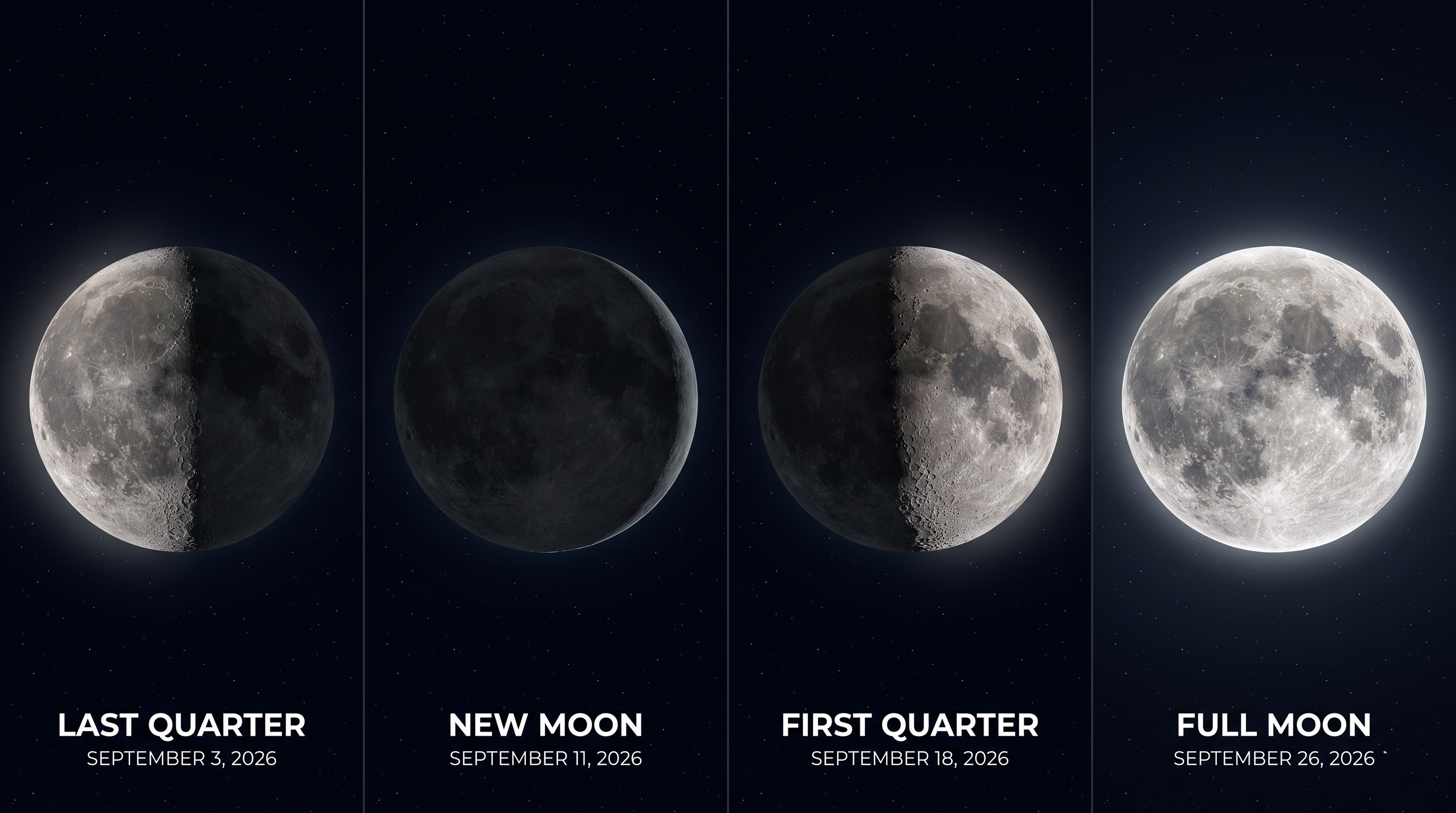
The Moon is the easiest thing in the sky to track, and September gives you a full cycle to watch from start to finish.
- Last Quarter Moon: September 4 — Half the Moon is lit, rising around midnight and staying visible into the morning.
- New Moon: September 10–11 (depending on your time zone) — The Moon is completely dark and invisible from Earth. This is the best window all month for stargazing, since there’s no moonlight to wash out fainter stars.
- First Quarter Moon: September 18 — Half lit again, visible in the evening sky, a great time to view craters along the Moon’s terminator line with binoculars.
- Full Moon (Harvest Moon): September 26 — The month’s highlight Moon event, covered in more detail below.
If you’re new to skywatching, the days around the New Moon on September 10–11 are your best bet for seeing faint objects like the Milky Way, since a bright Moon usually drowns them out.
Highlight Event 1: The September Equinox
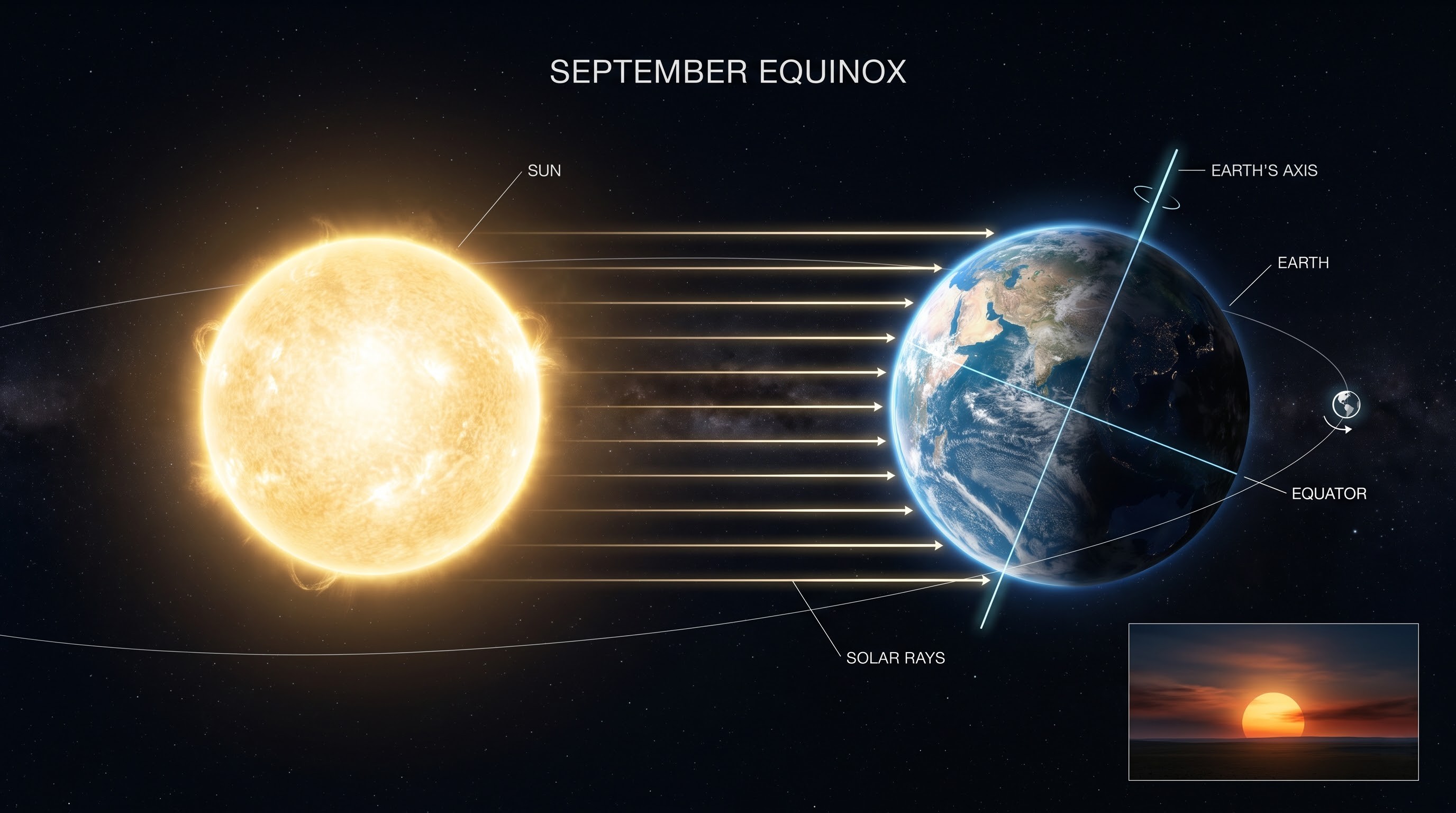
On September 22–23, 2026, the Sun crosses directly over Earth’s equator, marking the September equinox. This is the official start of astronomical fall in the Northern Hemisphere, and the start of spring south of the equator.
The word “equinox” comes from Latin words meaning “equal night,” since day and night are close to the same length everywhere on Earth around this date. You won’t see anything dramatic happen in the sky on the equinox itself, but it’s a meaningful marker, and it’s also the reason this month’s Full Moon gets a special name.
As a bonus, the equinox is also when Venus reaches near its greatest brightness in the evening sky this year, making it an easy, unmistakable point of light low in the west after sunset.
Highlight Event 2: Neptune at Opposition
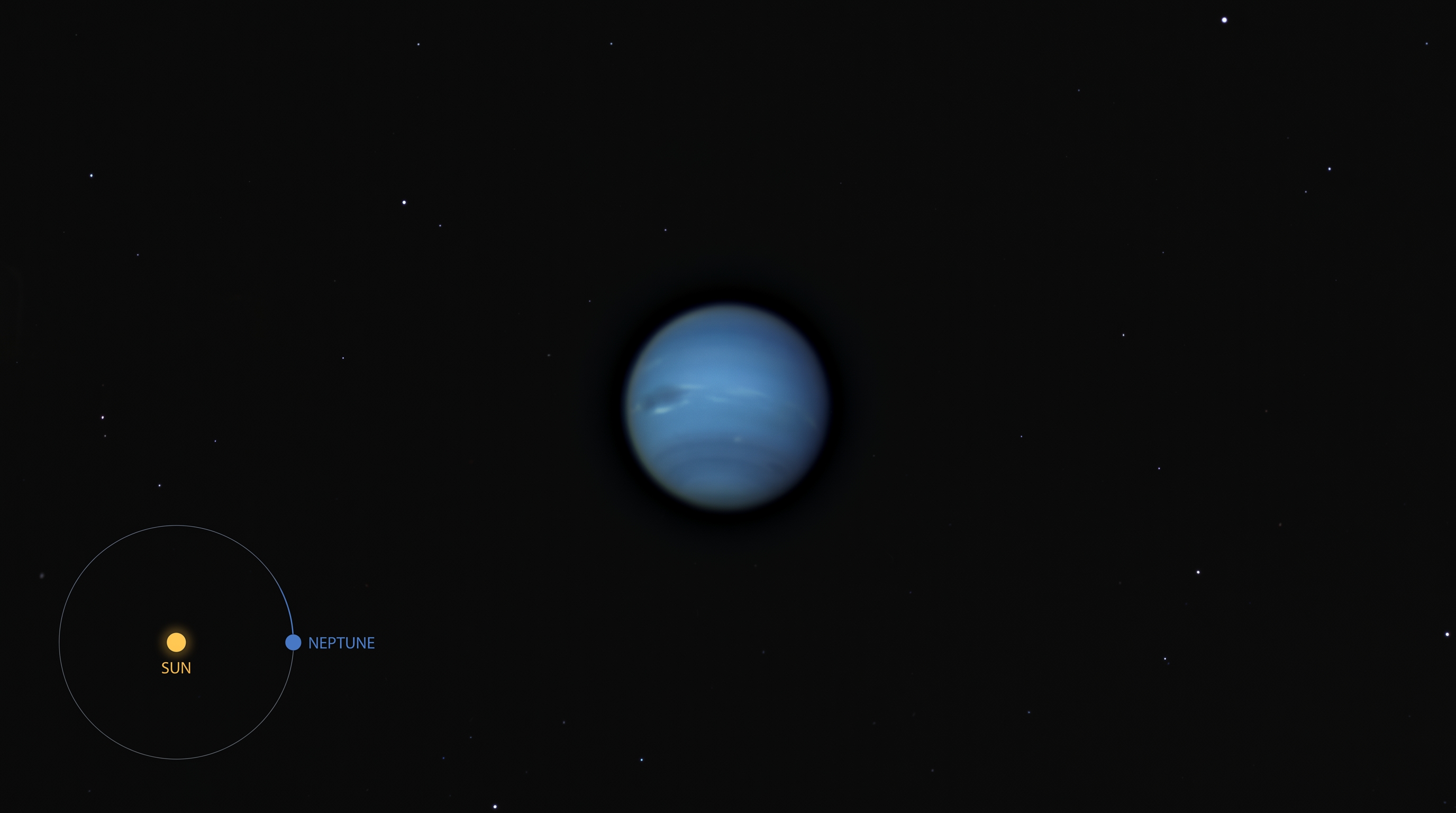
On September 25, 2026, Neptune reaches opposition, meaning Earth passes directly between Neptune and the Sun. This lines Neptune up opposite the Sun in our sky, making it visible all night long and as bright and close as it gets all year.
Here’s the honest beginner tip: Neptune is not a naked-eye planet. Even at its brightest, it’s far too faint to see without help. You’ll need at least a pair of binoculars under very dark skies, though a small telescope will make it much easier to actually pick out. One added challenge this year is that the Full Moon arrives just one day later, on September 26, so its bright light will make the sky harder to work with. If you can, try looking for Neptune a few nights before opposition, while the Moon is still fairly dim.
Neptune won’t look like much more than a tiny blue-gray dot, even through a telescope, but there’s something special about knowingly looking at the most distant major planet in our solar system, sitting billions of miles away.
Highlight Event 3: The Harvest Moon 2026
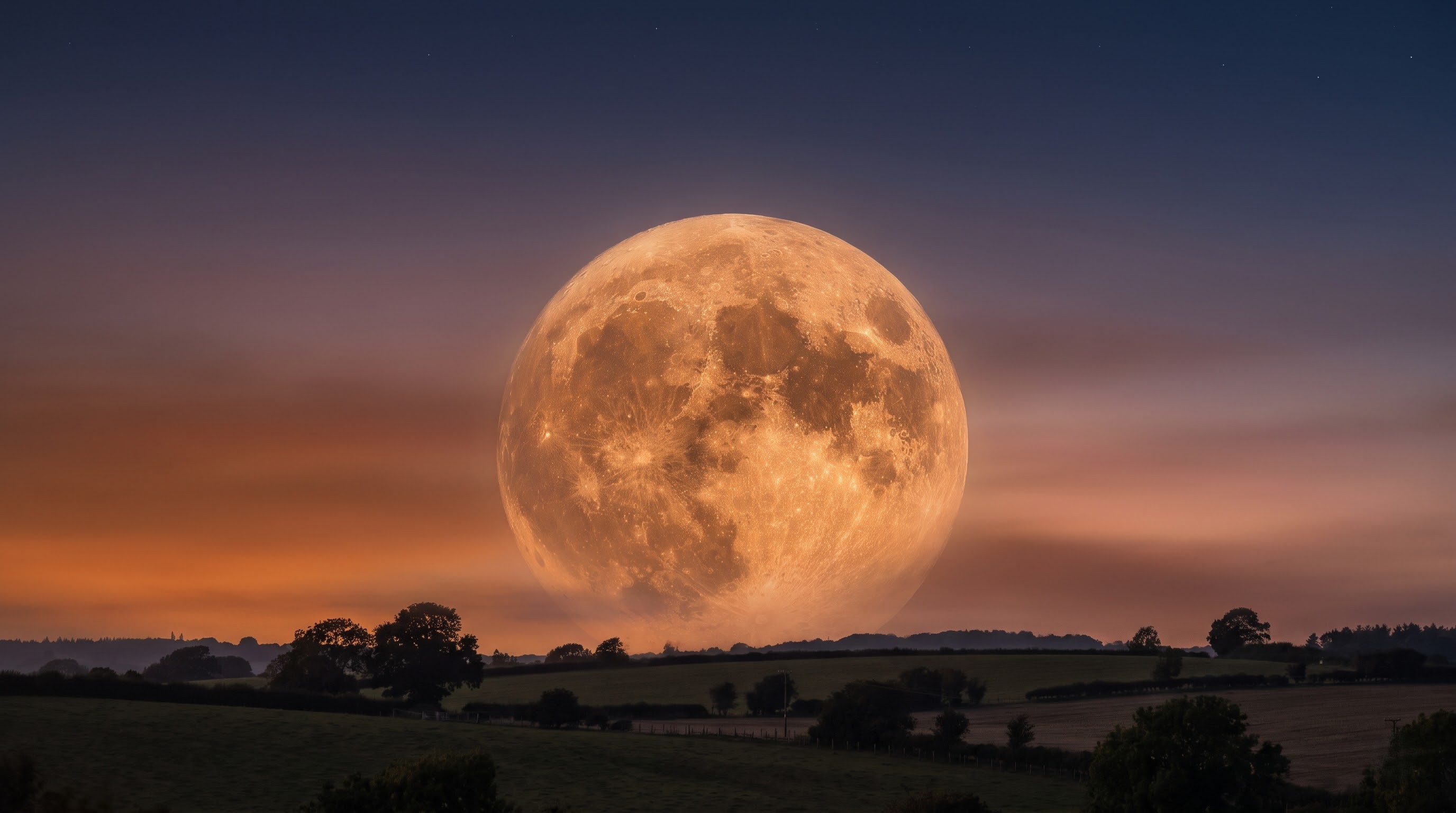
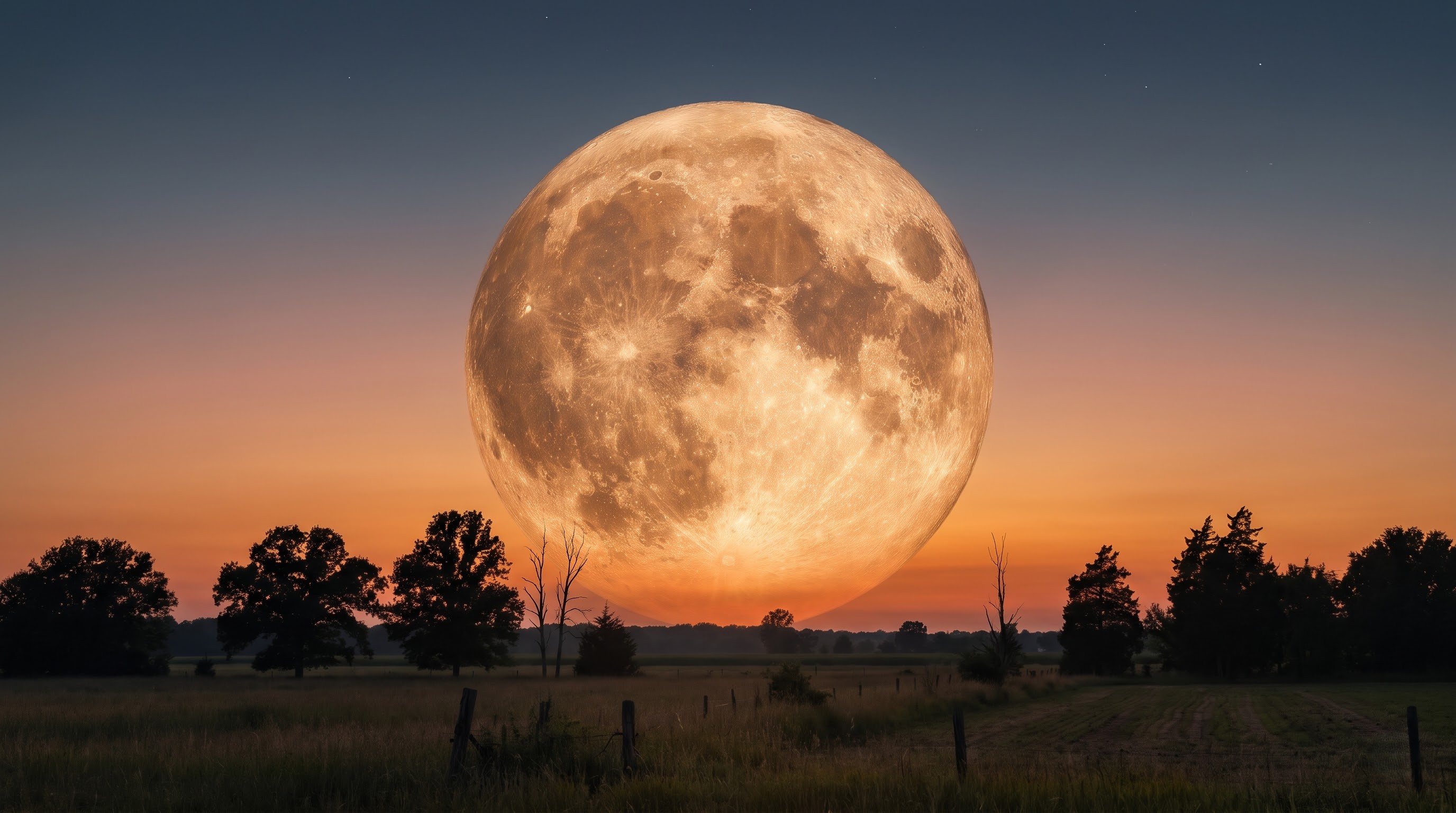
The Full Moon on September 26, 2026 carries a special name: the Harvest Moon. This title doesn’t automatically belong to September’s Full Moon every year, it goes to whichever Full Moon falls closest to the fall equinox, which usually means September, but occasionally slips into early October.
The Harvest Moon has a well-earned reputation for looking a little different from other Full Moons. Because of the angle of the Moon’s path in the sky this time of year, it tends to rise close to sunset for several evenings in a row, giving farmers extra light to finish harvesting crops in the days before electricity, which is exactly where the name comes from.
For the best view, don’t just look up at the Moon overhead. Head outside around sunset and watch the eastern horizon. A Full Moon rising close to the horizon often appears larger and takes on a warm orange or golden color, one of the most photogenic sights the night sky offers all year.
Meteor Showers in September 2026
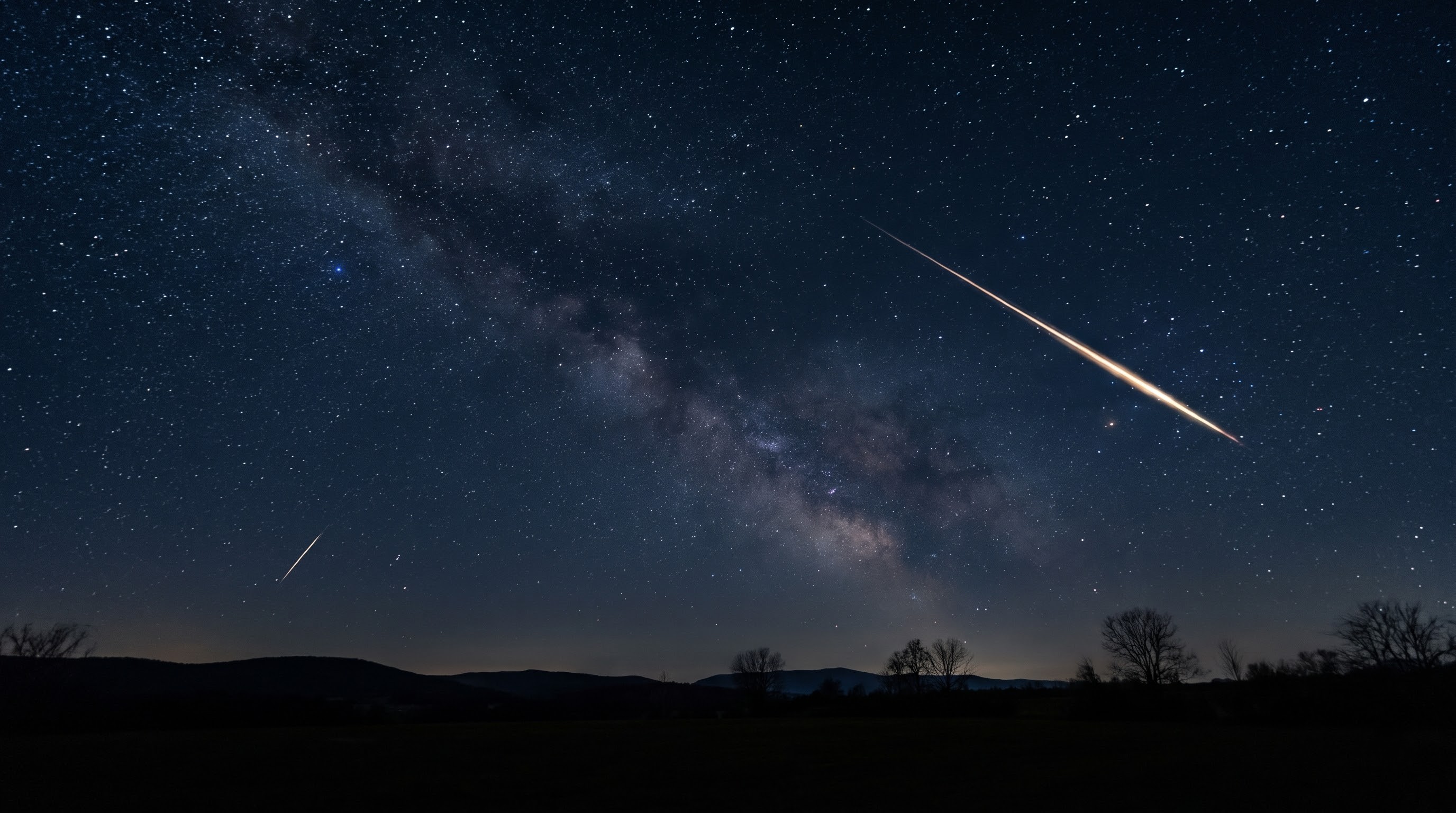
September is quiet on the meteor shower front compared to months like August or December, but there are three minor showers worth knowing about if you happen to be outside on the right night. None of these will produce a dramatic show, so it’s best to set your expectations accordingly and treat them as a nice bonus rather than the main event.
- Aurigids — Peak around September 1. A minor shower with only a handful of meteors per hour under ideal conditions.
- September Epsilon Perseids — Peak around September 9. Another minor shower, best seen after midnight.
- September Lyncids — Peak around September 13. A lesser-known, low-activity shower.
For any of these, the same advice applies: find the darkest sky you can, give your eyes at least 20 minutes to adjust, and be patient. You’re looking for a handful of meteors per hour at best, not a storm.
Planets Visible in September 2026
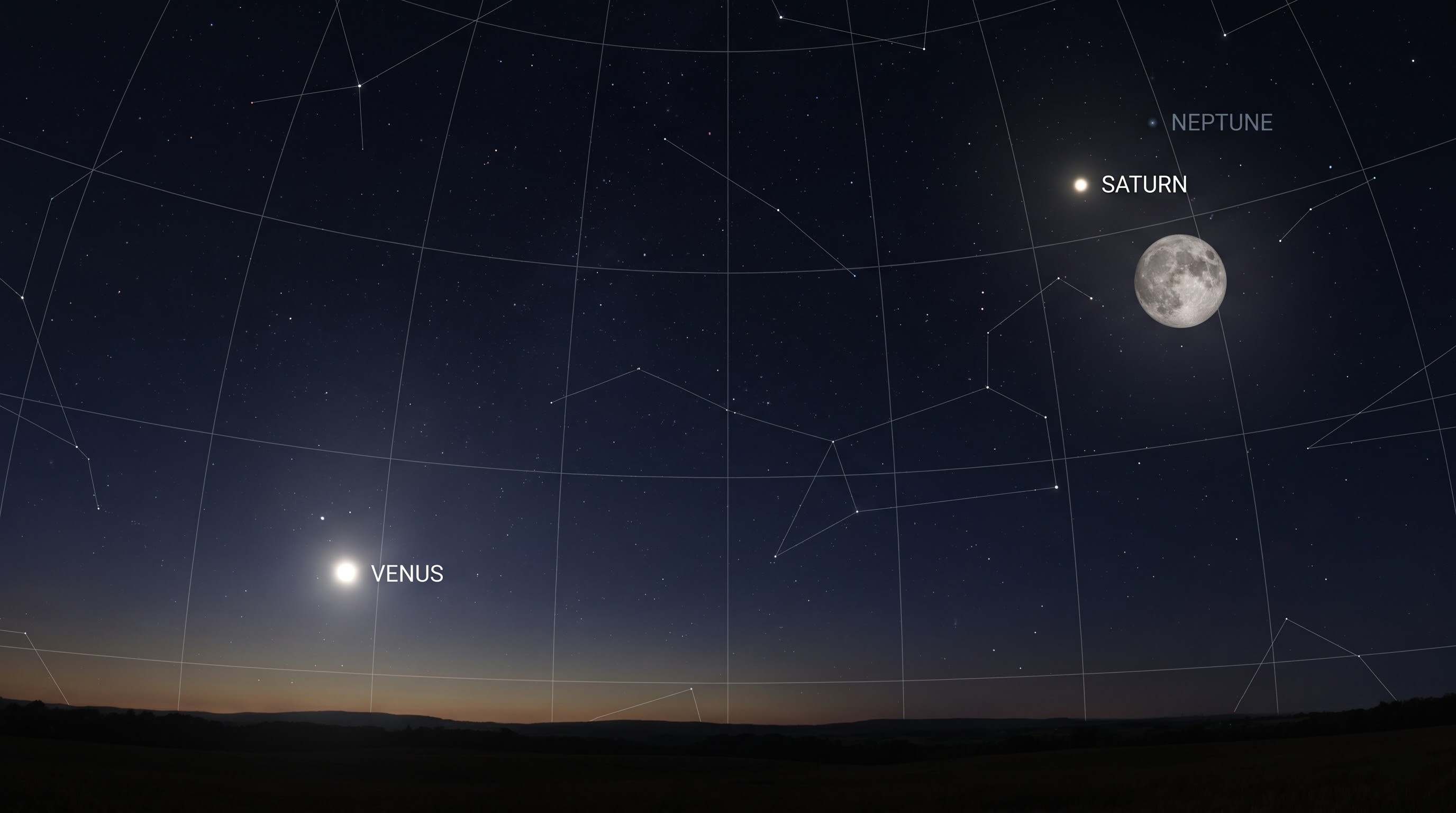
Beyond Neptune’s big month, a few other planets are worth watching:
- Saturn is rising earlier each night and steadily getting brighter as it heads toward its own opposition in early October. It’s easily visible to the naked eye and looks stunning through even a small telescope, so September is a great warm-up month before Saturn’s best show arrives.
- Venus remains a brilliant, unmistakable presence low in the evening sky, especially bright around the equinox in late September.
- Moon and planet pairings are worth watching all month. Keep an eye out for the Moon passing near Venus in mid-September, and don’t miss September 26, when the Full Harvest Moon shines close to both Saturn and Neptune in the same part of the sky, a great opportunity to try spotting Saturn with your naked eye and then hunt for Neptune nearby with binoculars or a telescope.
Best Tips for Stargazing This Month
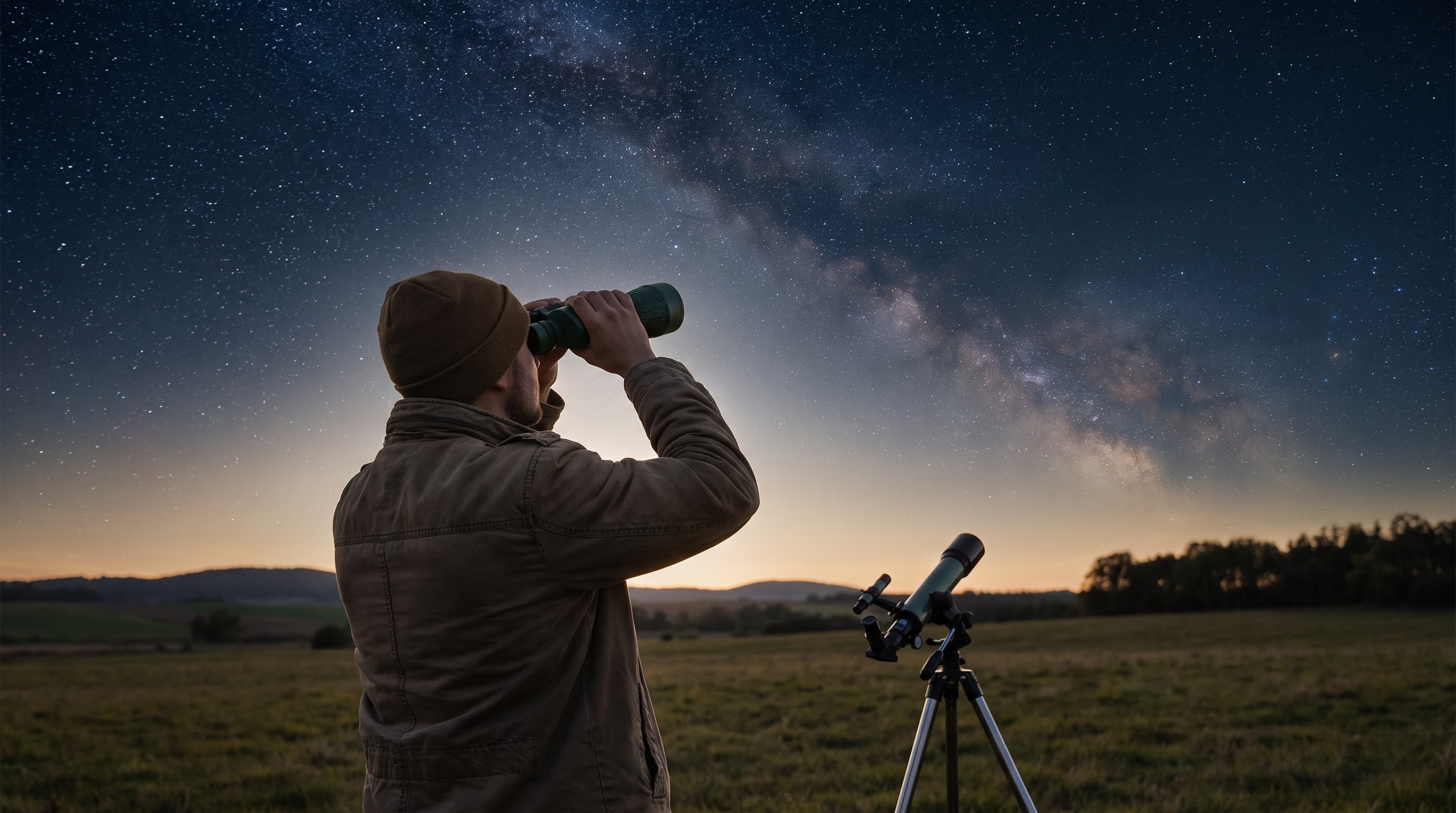
You don’t need expensive equipment to enjoy September’s sky. A few simple habits make a huge difference:
- Check the Moon phase first. Dimmer skies around the New Moon on September 10–11 are best for faint objects like the Milky Way, while bright Moon nights are perfect for Moon-watching itself.
- Give your eyes time to adjust. It takes about 20 minutes in the dark for your night vision to fully kick in, so avoid checking your phone screen.
- Get away from city lights if you can. Even a short drive to a darker area makes a noticeable difference.
- Use binoculars before buying a telescope. A decent pair of binoculars is enough to spot Saturn’s shape starting to hint at rings and to help you search for Neptune.
- Dress warmer than you think you need to. September nights cool down fast once the Sun sets.
Conclusion
September 2026 packs a lot into one month: a full Moon cycle, the turn of the season, a rare best-of-the-year view of Neptune, three minor meteor showers, and a beautifully named Harvest Moon closing things out on September 26. You don’t need to catch every single event to enjoy it, even picking one or two clear nights to step outside is enough to see something worthwhile.
Mark your calendar for the Harvest Moon on September 26 and the New Moon dark-sky window around September 10–11, and keep an eye out for Saturn as it brightens ahead of its own big month in October. Check back on our Space Events page for a fresh guide before next month’s sky rolls around, there’s always something new worth looking up for.