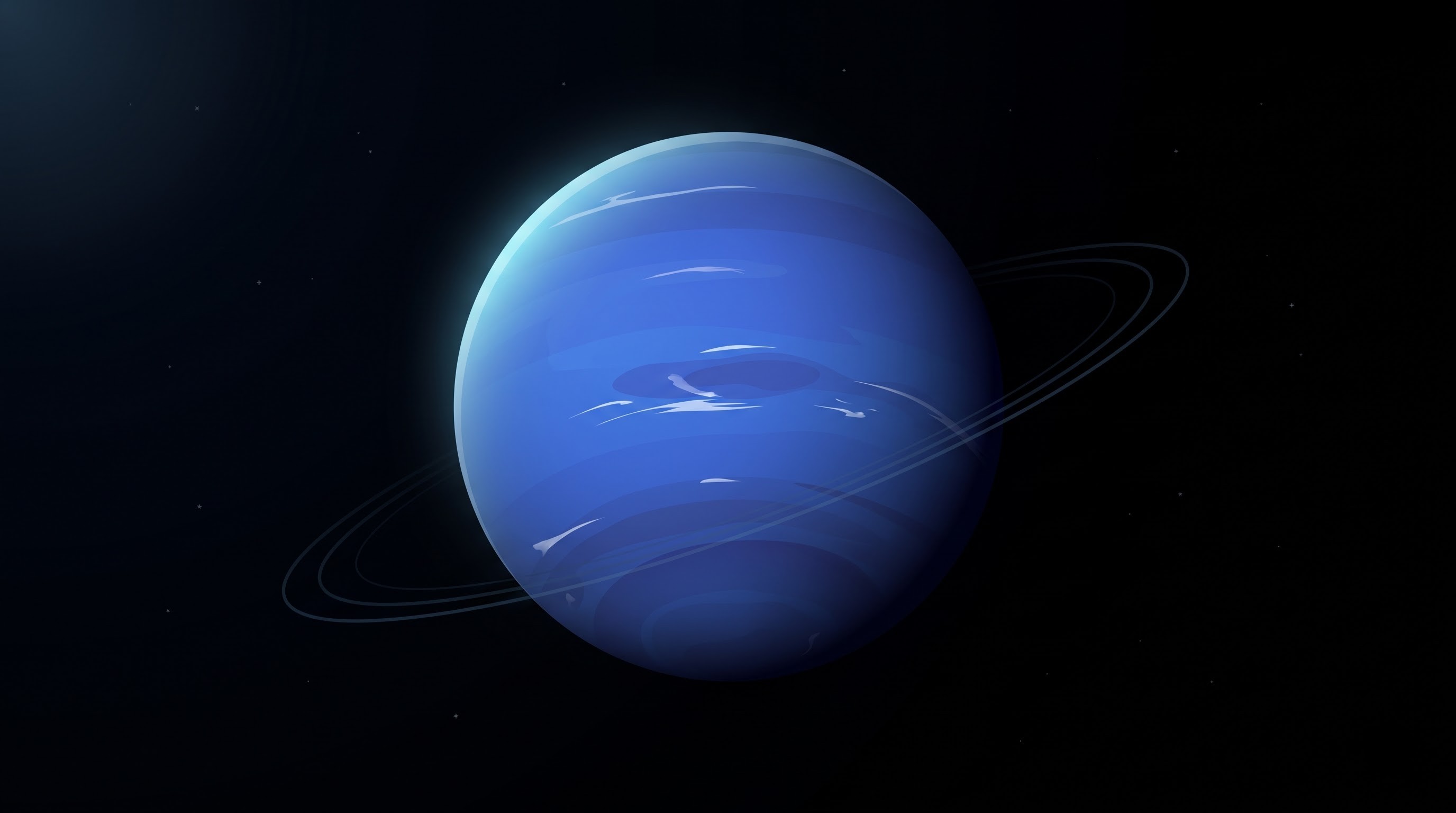
How to See Neptune at Its Best in September 2026
Neptune reaches opposition on September 26, 2026. Here’s exactly when, where, and how to find it, with or without a telescope.
Introduction
Once a year, Neptune lines up perfectly with Earth and the Sun, and for a few weeks it becomes as bright and easy to find as it ever gets. That moment arrives on September 26, 2026, when Neptune reaches opposition, the single best night of the year to go looking for the solar system’s most distant major planet.
Neptune is never an easy target, and this guide won’t pretend otherwise. But with the right expectations, a bit of planning, and either a decent pair of binoculars or a small telescope, September 2026 is genuinely one of the best chances all year to actually see it for yourself.
What Is Opposition, and Why It Matters for Neptune
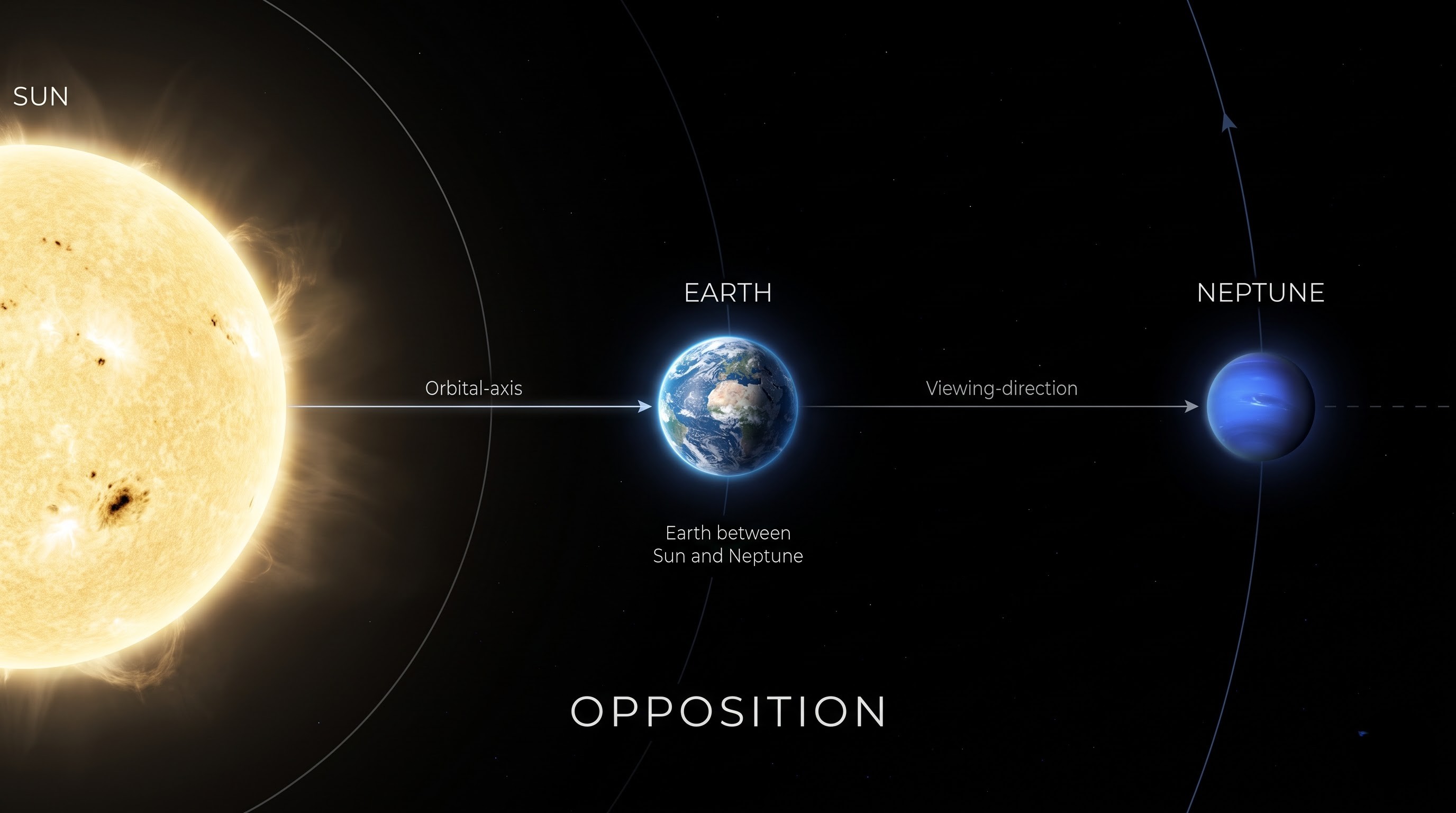
Opposition happens when Earth passes directly between a planet and the Sun. From our point of view, that puts the planet directly opposite the Sun in the sky, meaning it rises around sunset, is visible all night long, and reaches its highest point around midnight.
For closer planets like Mars or Jupiter, opposition also means noticeably better brightness and detail. Neptune is so far away, about 2.7 billion miles from Earth even at its closest, that opposition doesn’t change its appearance dramatically. But it does mean Neptune is as close, as bright, and as well-placed for viewing as it gets all year, which matters a lot for a planet this faint.
When Exactly Is Neptune at Its Best in 2026?
Neptune reaches exact opposition on September 26, 2026. At this point, it shines at magnitude +7.8, its brightest of the year, though still far too dim to see without help.
Here’s the catch: the Full Moon, this year’s Harvest Moon, also falls on September 26. Moonlight will wash out faint objects like Neptune, so the actual opposition date isn’t necessarily your best viewing night. Instead, try observing a few days before or after opposition, once the Moon has moved out of the way. Neptune stays close to its peak brightness for weeks on either side of opposition, so you have plenty of flexibility.
Where to Look: Finding Neptune Using Saturn
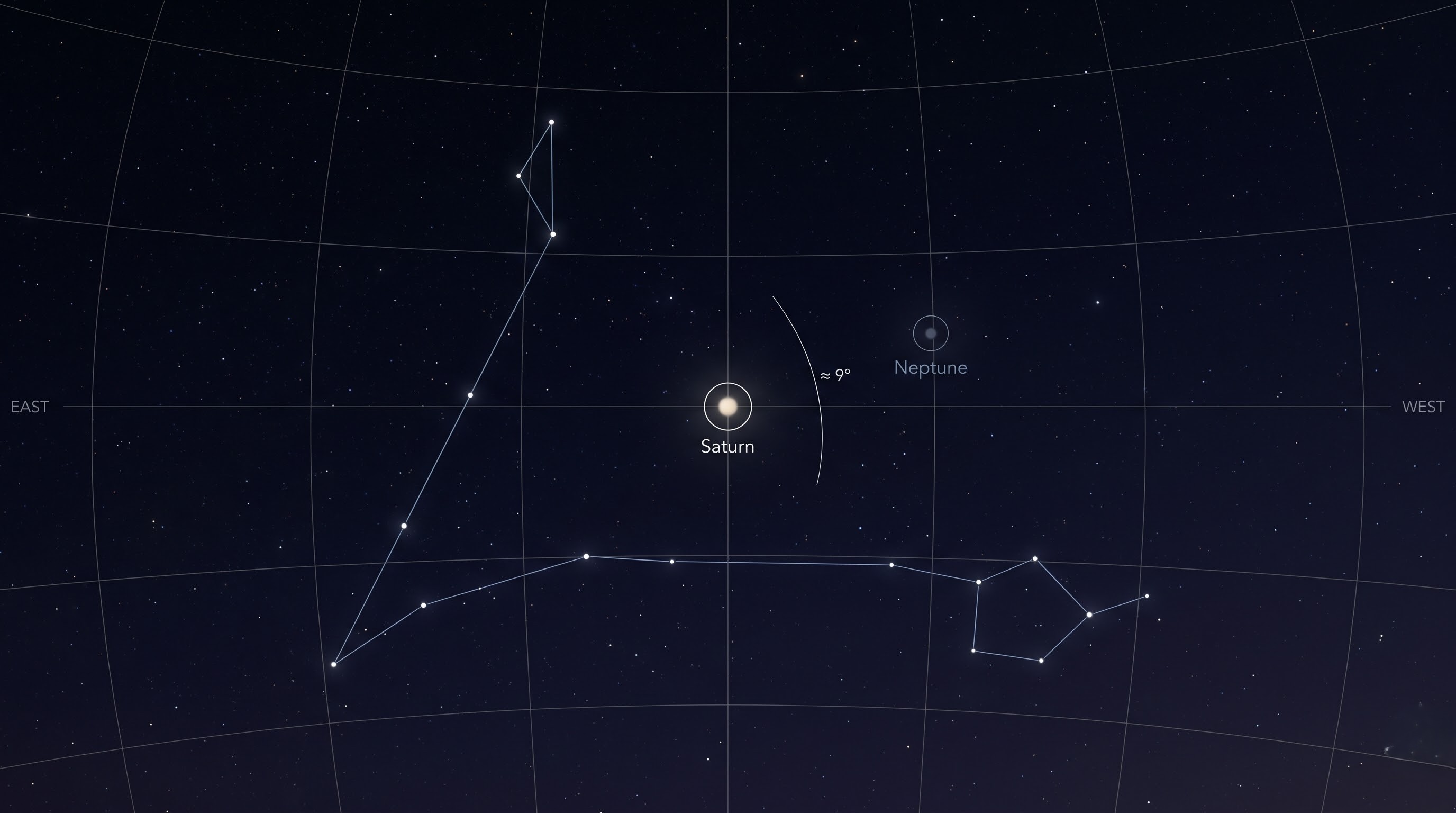
In September 2026, Neptune sits in the constellation Pisces, a faint, sprawling constellation that’s genuinely hard to navigate on its own. Thankfully, you don’t have to find Neptune using Pisces alone.
Saturn, which is bright, easy to spot, and also in Pisces this season, sits about 9 degrees west-southwest of Neptune. For reference, that’s roughly the width of your fist held at arm’s length.
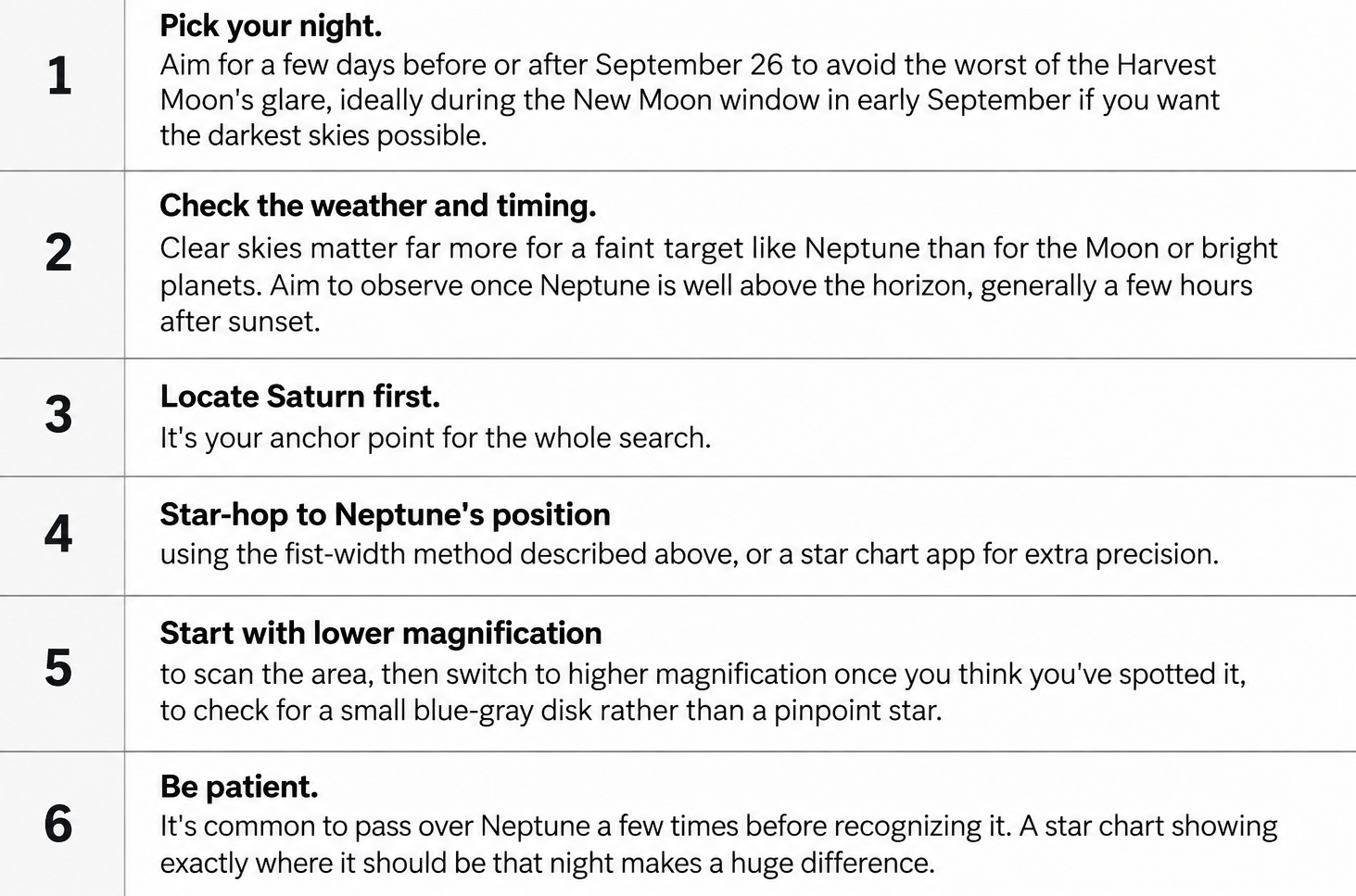
Simple steps to find Neptune using Saturn:
- Find Saturn first. It’s bright, steady, and easily visible to the naked eye.
- Hold your fist at arm’s length and measure roughly one fist-width to the east-northeast of Saturn.
- Scan that area slowly with binoculars or a telescope, looking for a faint, star-like point with a slightly blue-gray tint.
- Use a star chart app or a printed chart for the night you’re observing, since Neptune’s exact position shifts slightly night to night.
What Equipment Do You Need?
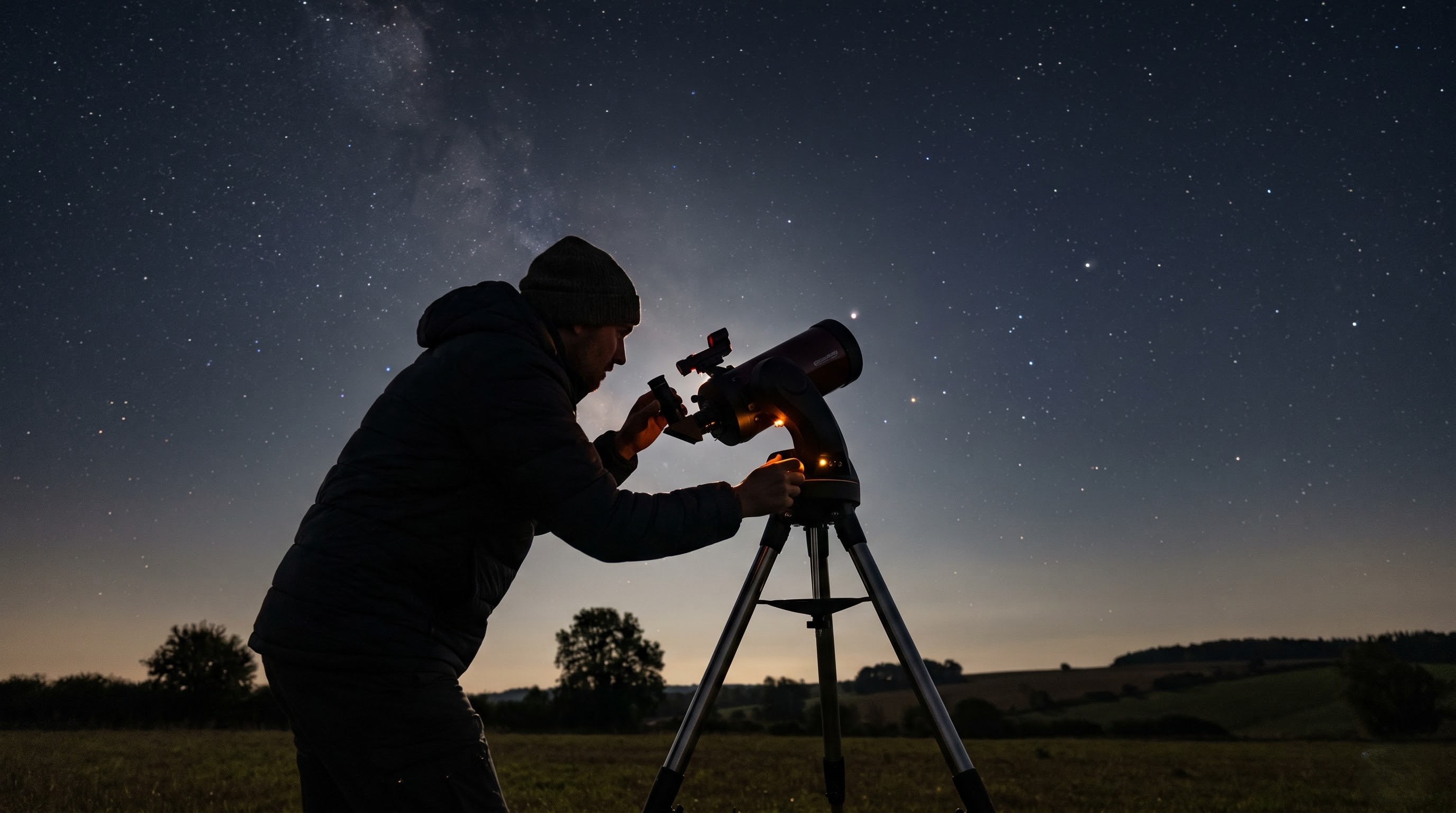
Let’s be upfront: Neptune is not visible to the naked eye under any circumstances. Here’s what actually works.
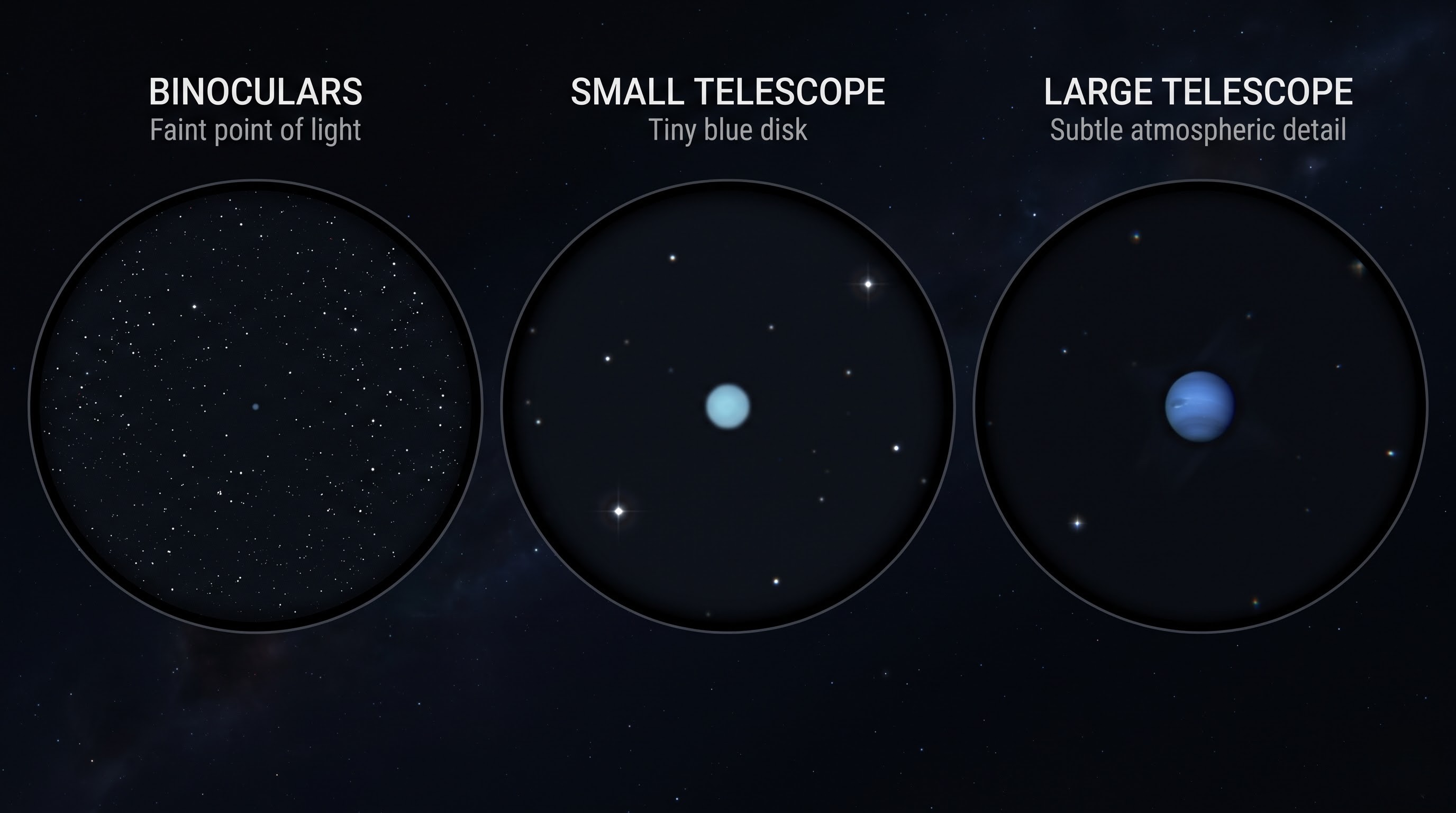
- Binoculars: A decent pair of binoculars, 10x50 or similar, can show Neptune as a faint, star-like point of light. You’ll be able to spot it, but not see it as an actual disk.
- A small telescope (150mm / 6-inch or larger): This is the sweet spot for actually seeing Neptune as a tiny disk rather than a point of light, along with its distinct pale blue color.
- A larger telescope (200mm / 8-inch or more): Under good, dark conditions, a telescope this size can potentially reveal Triton, Neptune’s largest moon, as an extremely faint point of light close to the planet.
Neptune’s apparent size is only about 2.4 arcseconds at opposition, tiny even by planetary standards, so higher magnification eyepieces help once you’ve located it.
Step-by-Step Guide: How to Observe Neptune
What You Can Actually Expect to See
Through binoculars, Neptune will look like an unremarkable, faint star, nothing that screams “planet” on its own. Through a 150mm telescope or larger, it becomes a tiny, pale blue-gray disk, distinctly different from the sharp pinpoints of background stars around it. That subtle color difference is usually the clearest giveaway that you’ve actually found it.
Don’t expect cloud bands or visible rings. Neptune at this distance is always going to be a small, quiet, blue dot. For most stargazers, the real thrill isn’t the visual detail, it’s the knowledge that the object in your eyepiece is billions of miles away, and that light left it years before it reached your eye.
Conclusion
Neptune will never be an easy or flashy target, but that’s part of what makes finding it so satisfying. With Saturn as your guide, a modest telescope or even just binoculars, and a bit of patience, September 2026 gives you one of the best windows all year to track down the most distant major planet in our solar system.
Pick a clear night a few days off from the Harvest Moon, get away from city lights, and give it a try. Check out our full September 2026 Night Sky Guide for everything else worth seeing this month, and visit our Space Events page to plan your next stargazing session.