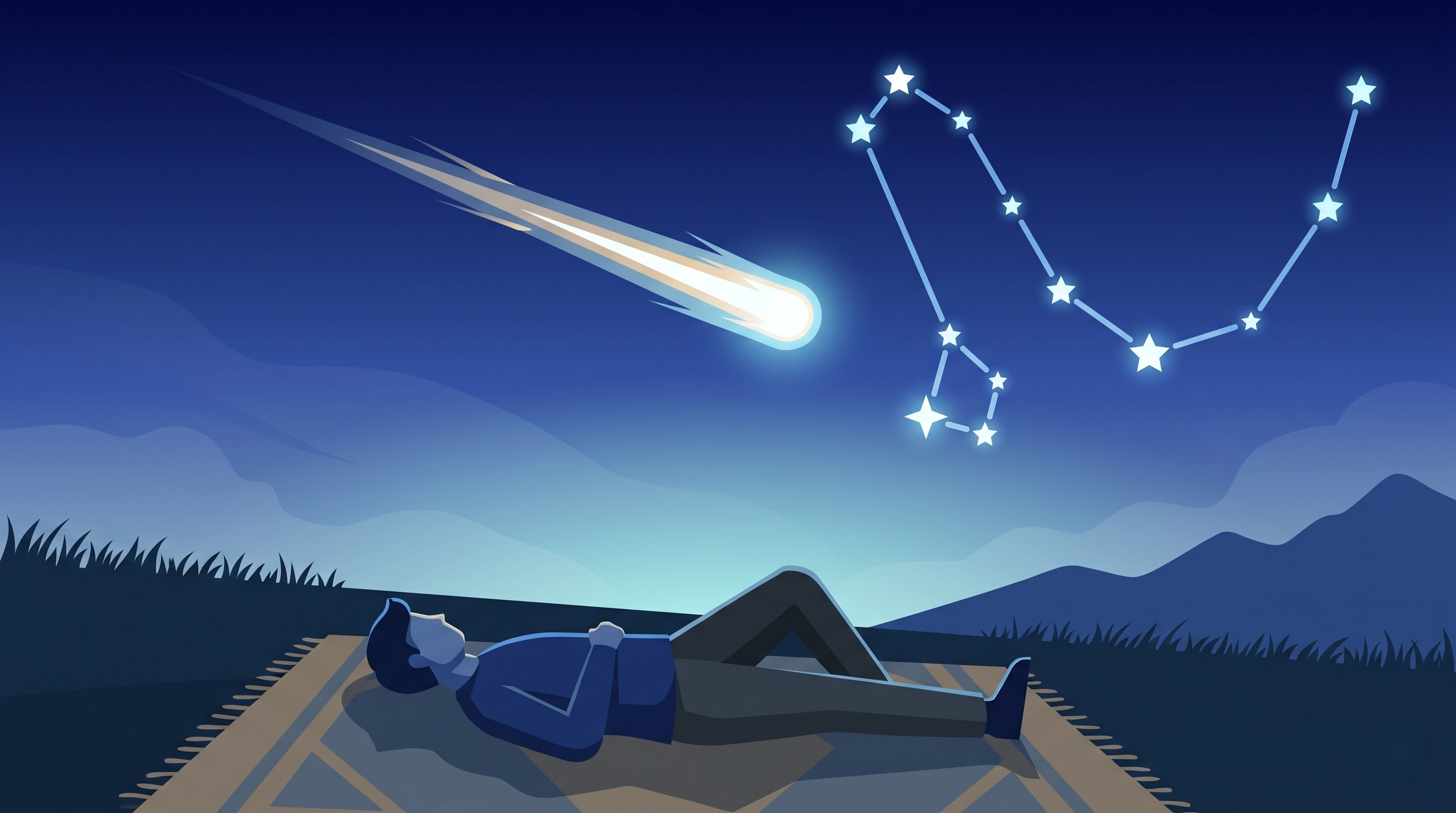
Draconid Meteor Shower 2026: How to Watch the Peak on October 8–9
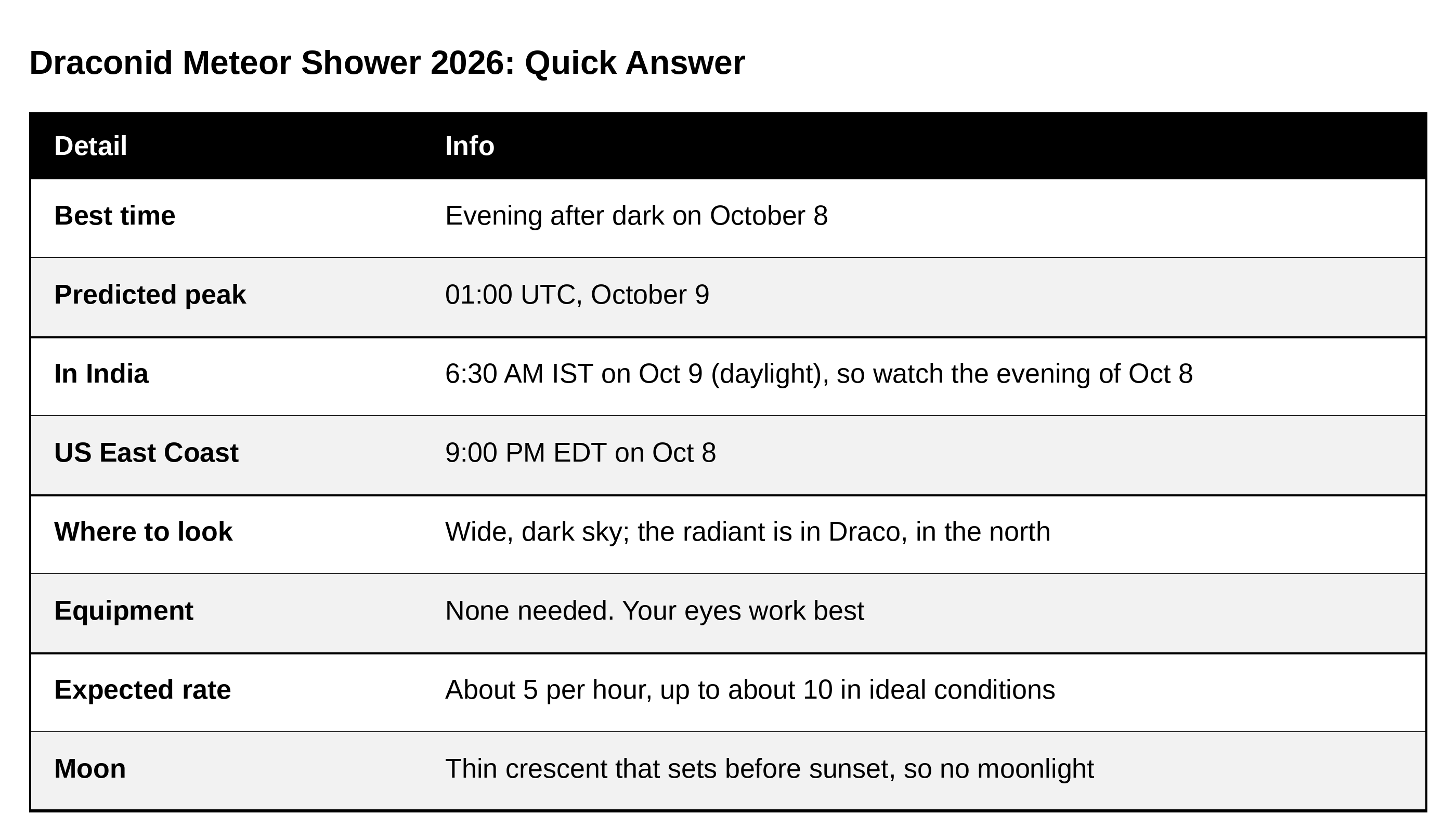
The Draconid meteor shower peaks tonight, October 8-9, and it is best watched in the evening. Here is the time in your zone and a simple plan to watch it.
Don’t expect fireworks. In a normal year you’d see around 5 meteors an hour from a dark spot, sometimes a few more. The Moon is out of the way this year, though, so even faint meteors are easier to catch. Clouds and city lights matter more than anything else.
What is the Draconid meteor shower?
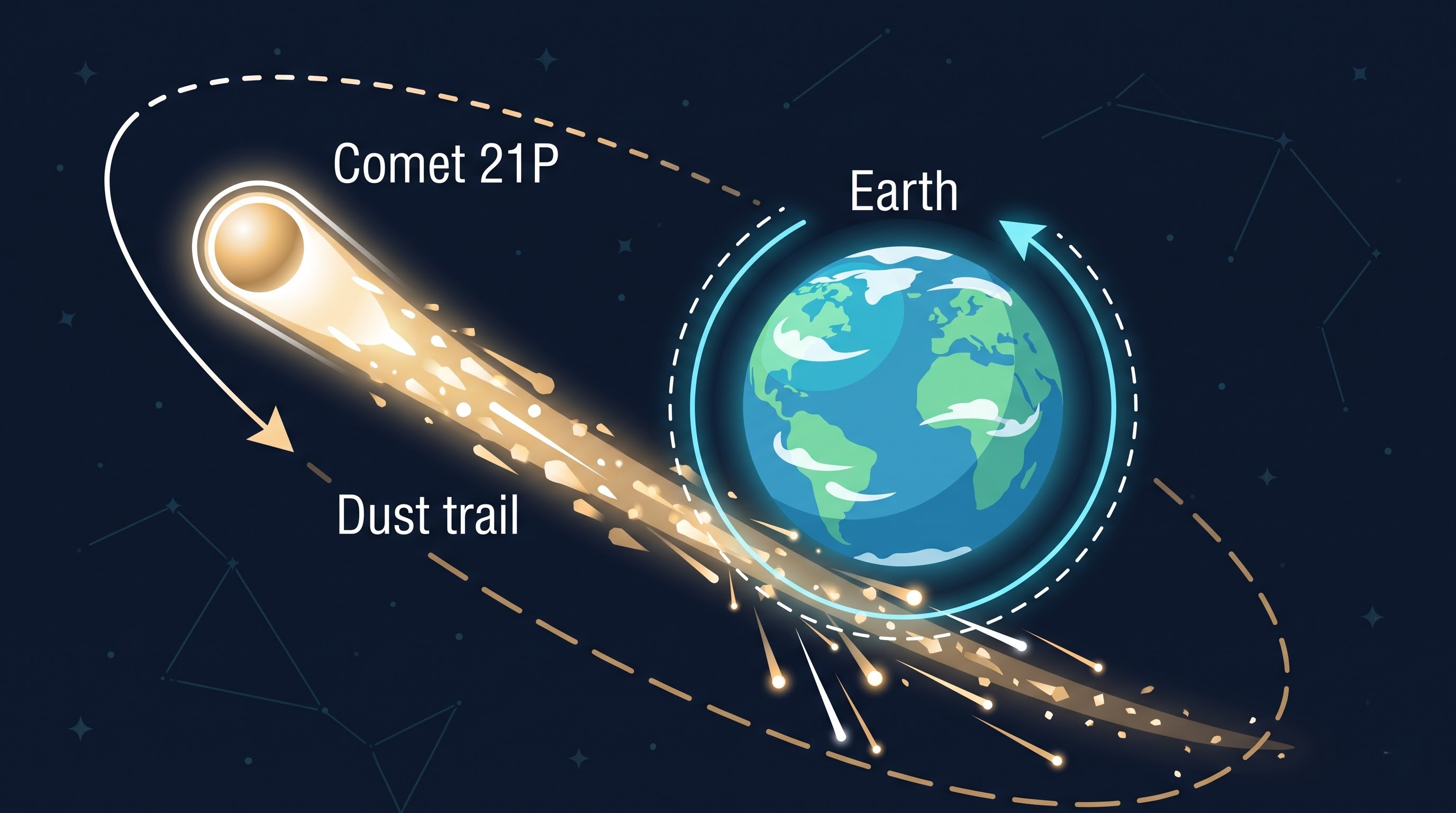
Meteors are tiny bits of space dust burning up in our atmosphere. The Draconids come from dust left behind by Comet 21P/Giacobini-Zinner. Each October, Earth passes through that trail.
The meteors seem to start from the constellation Draco, the Dragon, which is why the shower has its name. You don’t need to see the comet, and you don’t need to find Draco either. Draconids are also slow, so they tend to drift across the sky instead of flashing past.
When can you see it?
The shower runs from October 6 to 10, and tonight is the best night. The predicted peak is 01:00 UTC on October 9.
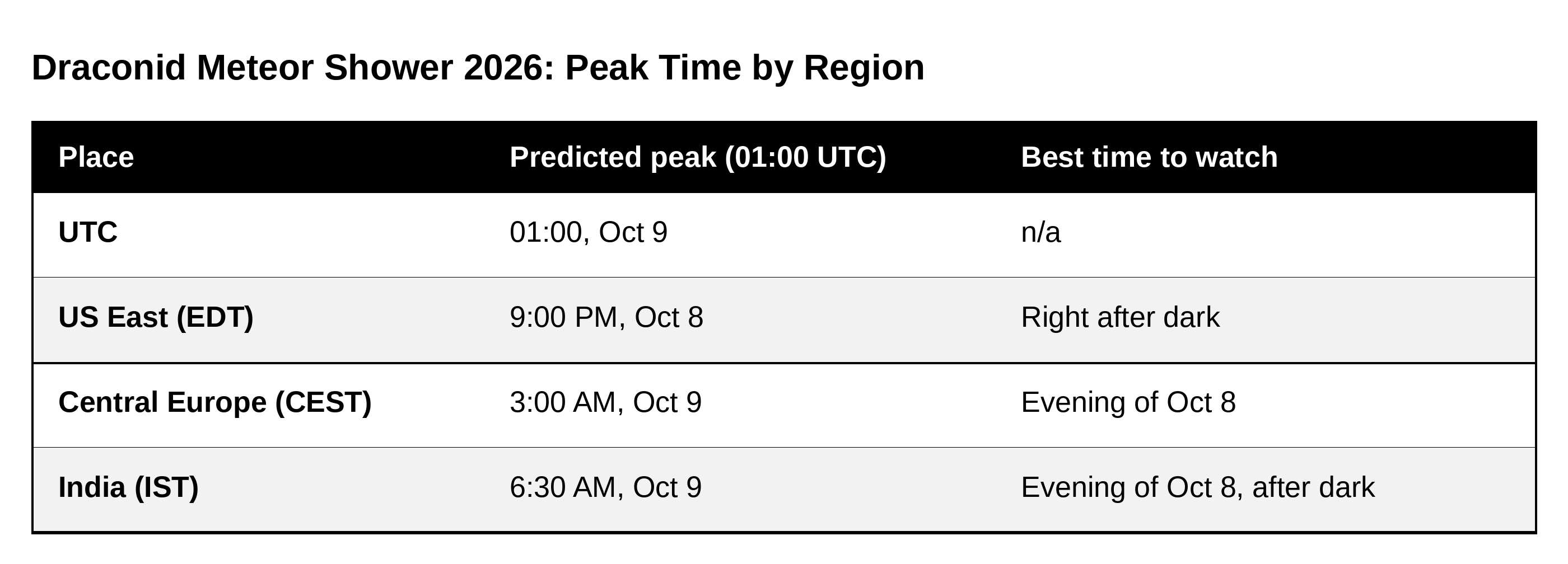
If you’re in India, that peak lands at 6:30 AM, after sunrise, so ignore it. The radiant is highest right after nightfall and sinks later, so go out in the early evening. Your local darkness and the weather matter more than the exact peak minute.
Where should you look?
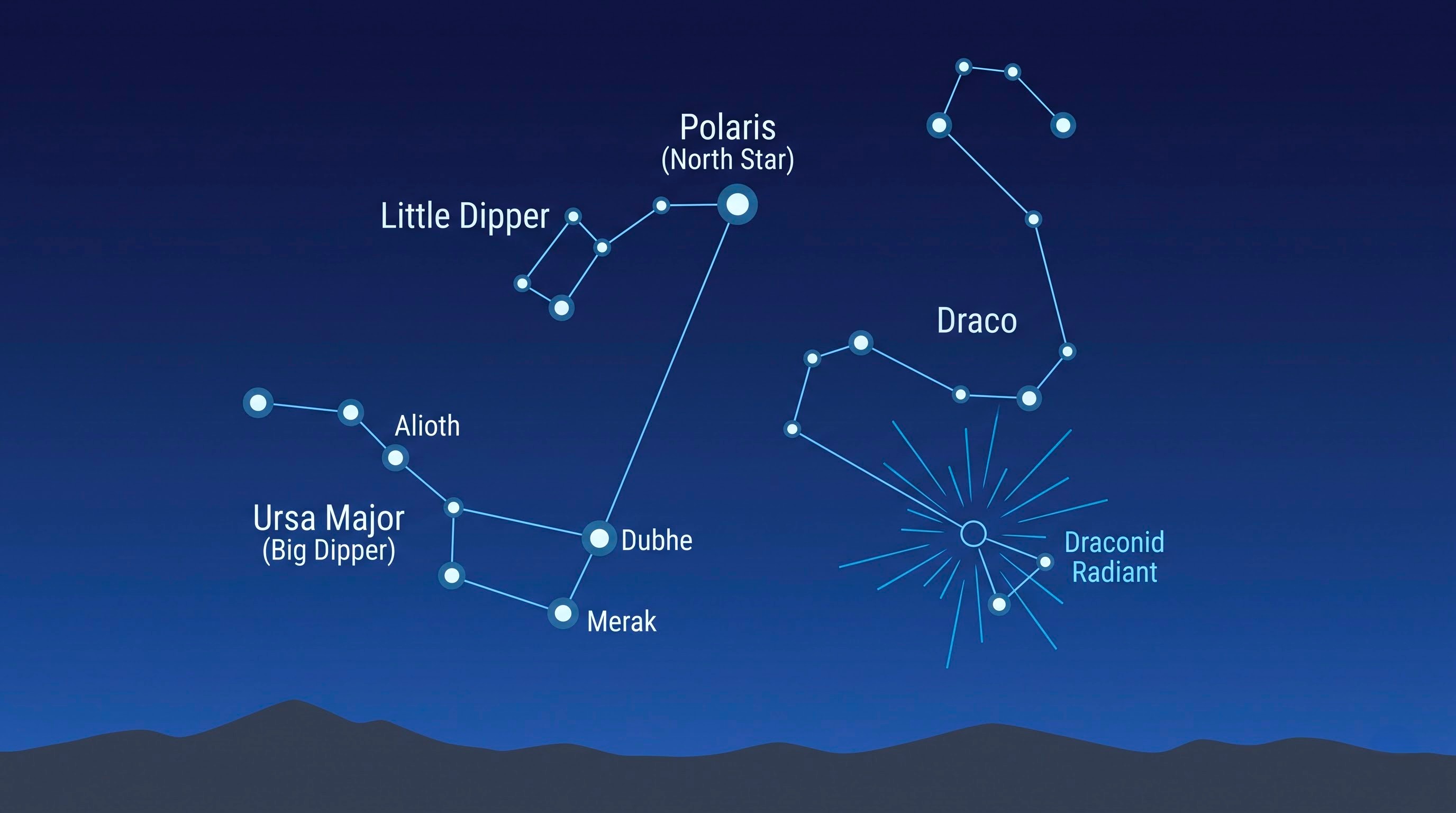
Find the darkest safe spot you can, with a wide view of the sky. Facing north is a good start, since Draco sits in the northern sky. Look a little away from it rather than straight at it, because meteors close to the radiant look shorter.
From northern and central India, the northern sky is well placed. From the Southern Hemisphere the shower sits low and looks weaker.
Do you need a telescope?
No, and a telescope would actually make things harder because it only shows a tiny patch of sky. Bring a blanket or a reclining chair and just lie back.
A simple plan for beginners
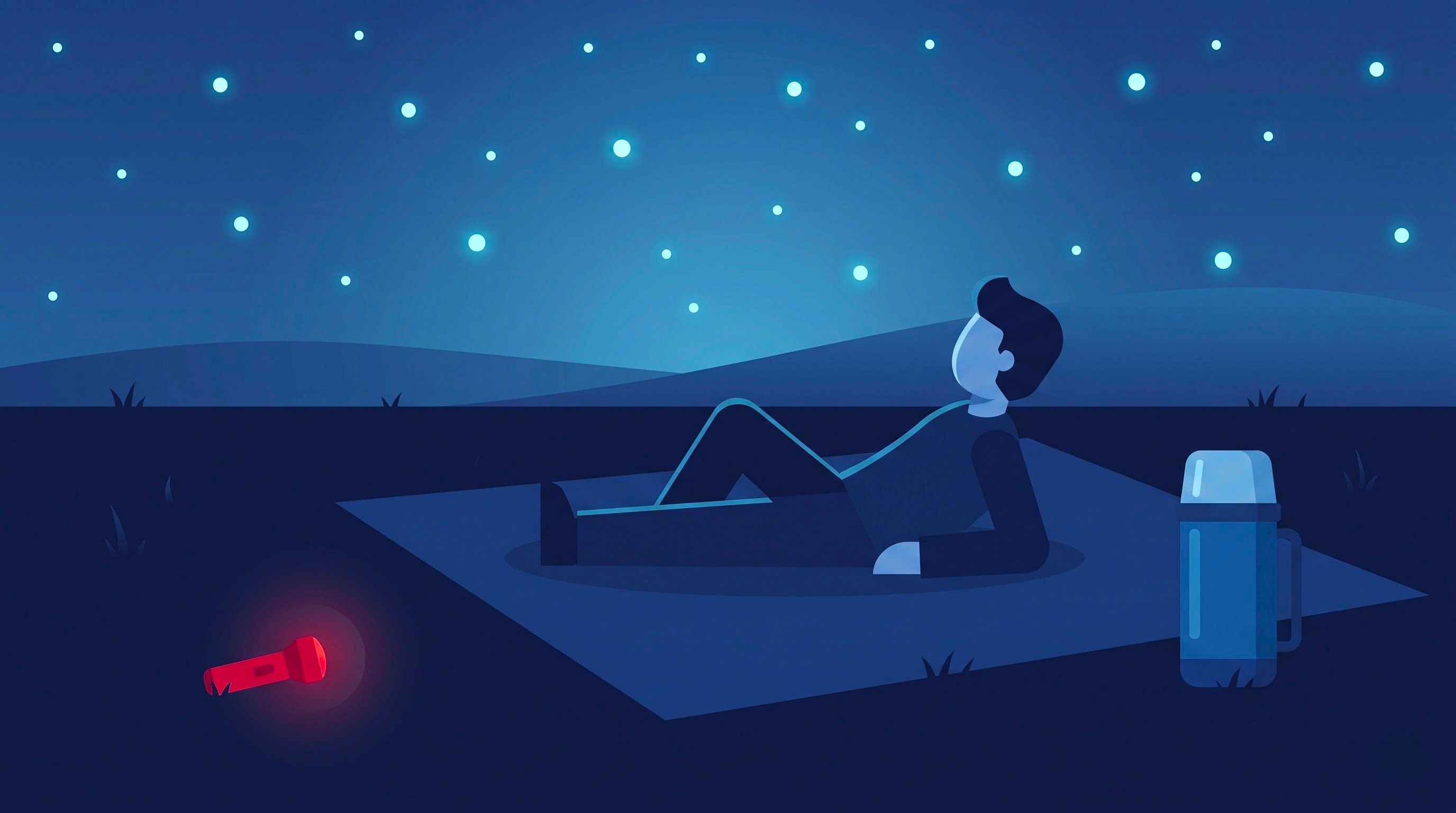
- Check the weather. A clear sky matters most.
- Pick a safe, dark place away from direct lights, like an open rooftop or park.
- Dress warmer than you think. Sitting still gets cold fast.
- Give your eyes 20-30 minutes to adjust, and keep your phone dim.
- Lie back and scan the whole sky, not one spot.
- Stay for at least 30 minutes. Meteors come in bursts with quiet gaps.
What to realistically expect
From a dark place, a few meteors an hour is normal. In a city, you’ll see fewer, and that isn’t a failure. The Draconids did produce huge outbursts in 1933 and 1946, but nothing like that is forecast for 2026. If you get a bright surprise, treat it as a bonus.
Common mistakes
- Waiting for the 01:00 UTC peak and missing the evening window
- Checking your phone and ruining your night vision
- Leaving after five minutes
- Staring at one spot instead of the whole sky
Final thoughts
The Draconids are a great first meteor shower: an easy evening time, no equipment, and a dark sky this year. Go out after dark, give your eyes time to adjust, and enjoy whatever shows up.
For more, check our Space Events Calendar and the Beginner’s Guide to Stargazing. The Orionids peak on October 21-22, so that’s the next one to plan for.
Written By

Satyam Patel
15-year-old space enthusiast and Founder of Solar System Explorers. I simplify space science for everyone.
thesatyamempire@gmail.com