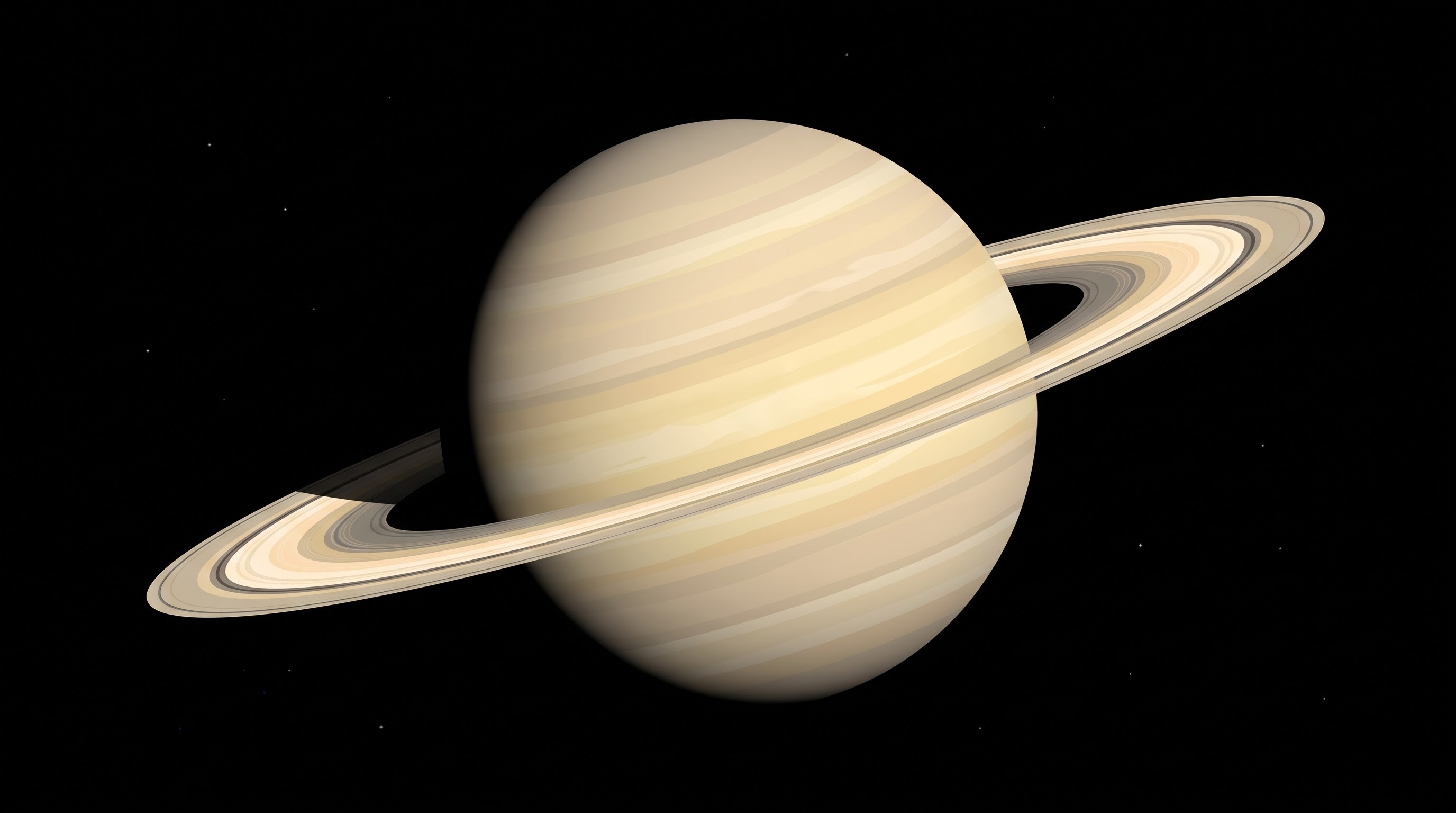
Saturn at Opposition 2026: Best Time to See the Rings
Saturn reaches opposition on October 4, 2026. Here’s the best time to see its rings, what equipment you need, and how to find it in the sky.
Why October 2026 Is a Big Month for Saturn
Saturn’s rings had a rough year in 2025. For a while, they appeared almost completely edge-on, nearly invisible even through a telescope.
That’s changing. In October 2026, Saturn reaches opposition, and its rings are noticeably tilted open again, easy to see once more with the right equipment. If you’ve been waiting for Saturn to actually look like Saturn, this is your month.
When Exactly Is Saturn at Opposition in 2026?
Saturn reaches opposition on October 4, 2026.
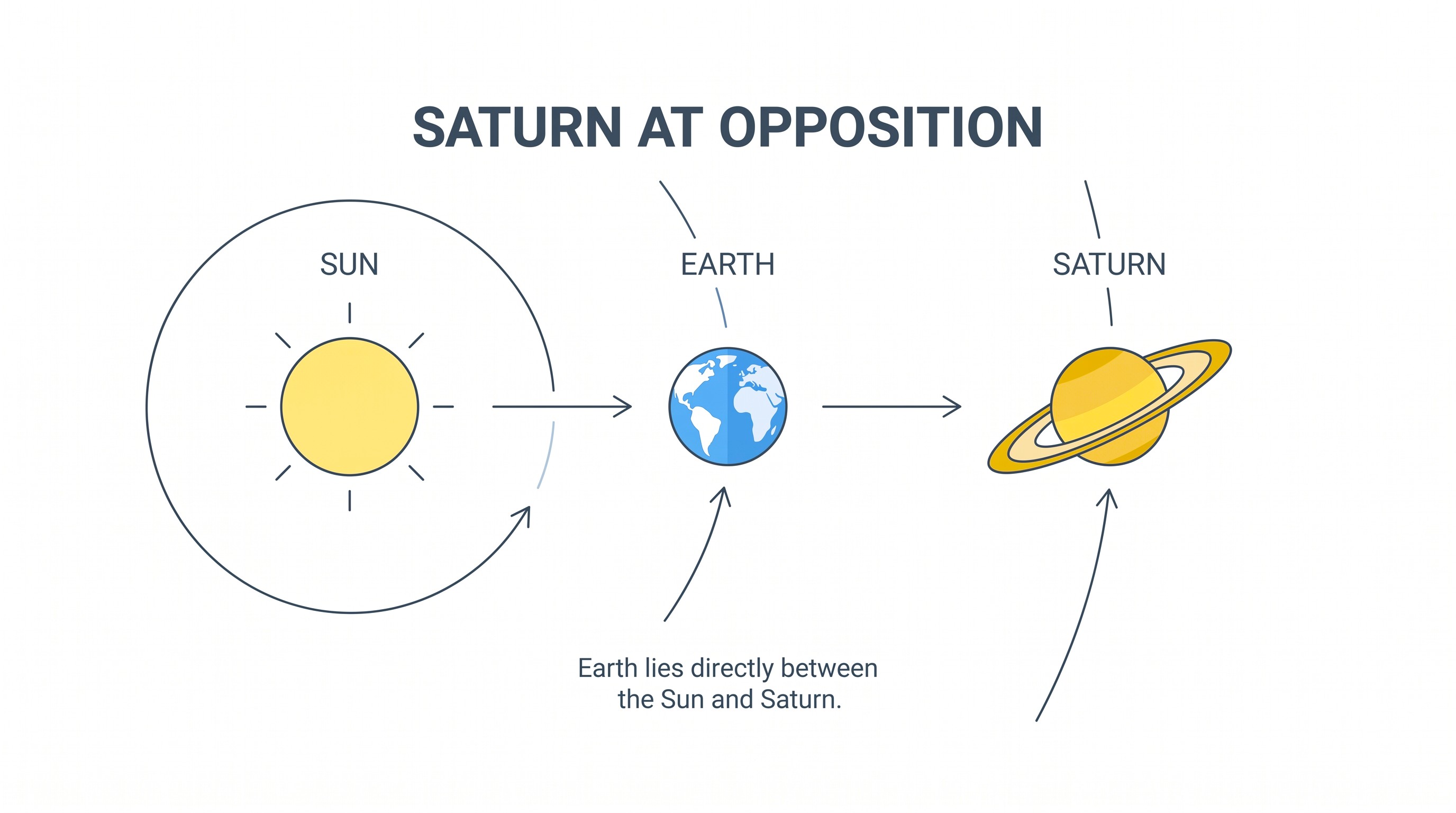
At opposition, Earth passes directly between Saturn and the Sun. Saturn sits opposite the Sun in our sky, rising around sunset, staying visible all night, and reaching its highest point around midnight.
You don’t have to observe on the exact date. Saturn stays close to its best brightness and visibility for weeks on either side, making mid-September through late October 2026 a wide, forgiving viewing window.
Why Opposition Is the Best Time to See Saturn
Three things line up at opposition, and all of them work in your favor:
- Closest distance. Saturn is as close to Earth as it gets all year.
- Brightest appearance. Saturn shines around magnitude 0.3, easily one of the brightest points in the night sky.
- All-night visibility. Instead of catching a short window before dawn or after dusk, Saturn is up from sunset to sunrise.
Put simply, opposition is Saturn’s yearly highlight reel, and this year it comes with an extra bonus.
How the Rings Look in 2026
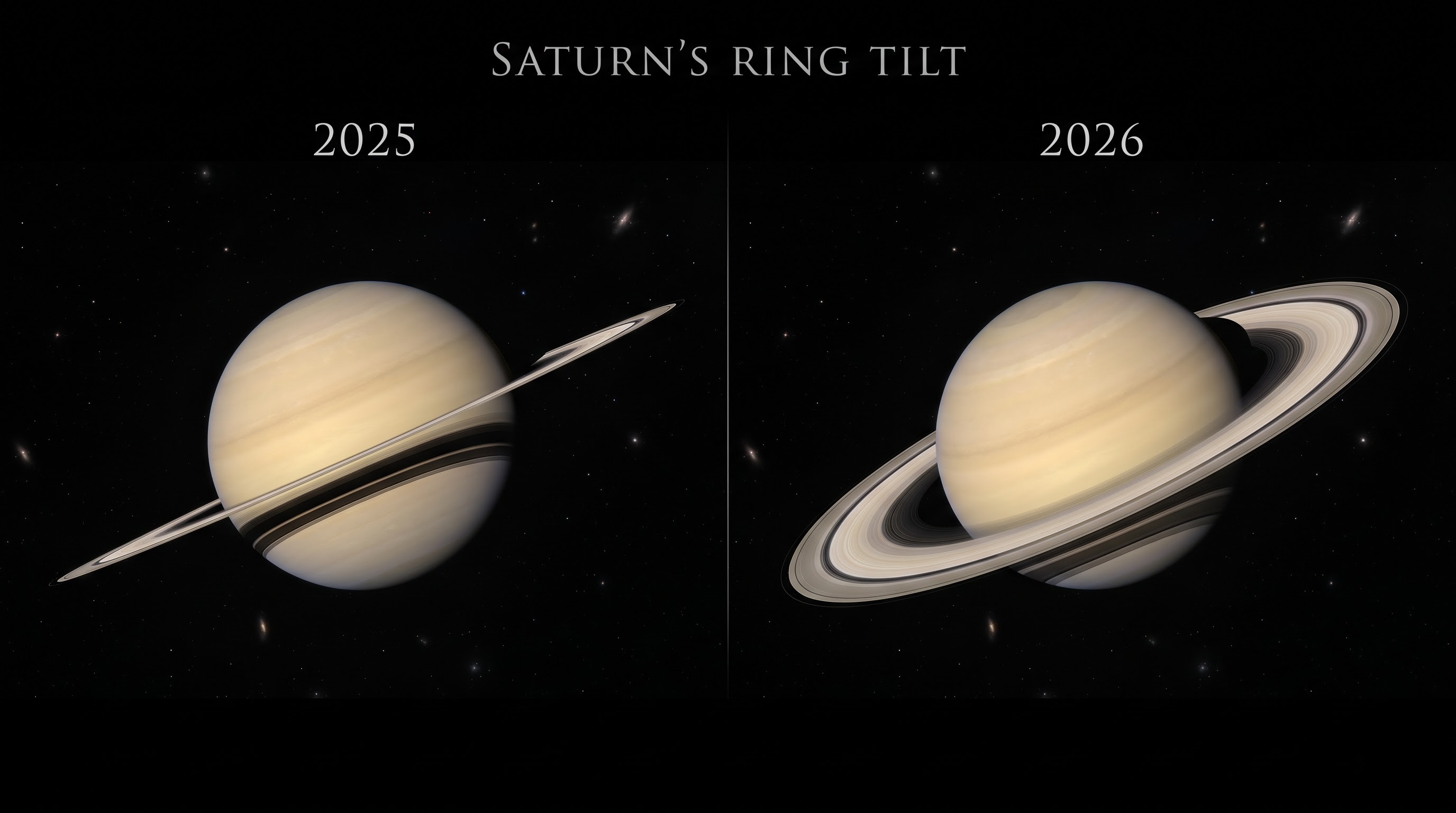
Saturn’s rings aren’t always tilted the same way toward Earth. Over years, they gradually open and close, and in 2025 they briefly appeared almost completely edge-on, a thin line rather than a wide ring.
By October 2026, the rings are tilted about 7.5 degrees, enough to look like a proper ring system again rather than a flat line. It’s not the widest-open view Saturn ever offers, but it’s a huge improvement, and genuinely satisfying through even a modest telescope.
How to See Saturn’s Rings: Naked Eye vs Binoculars vs Telescope
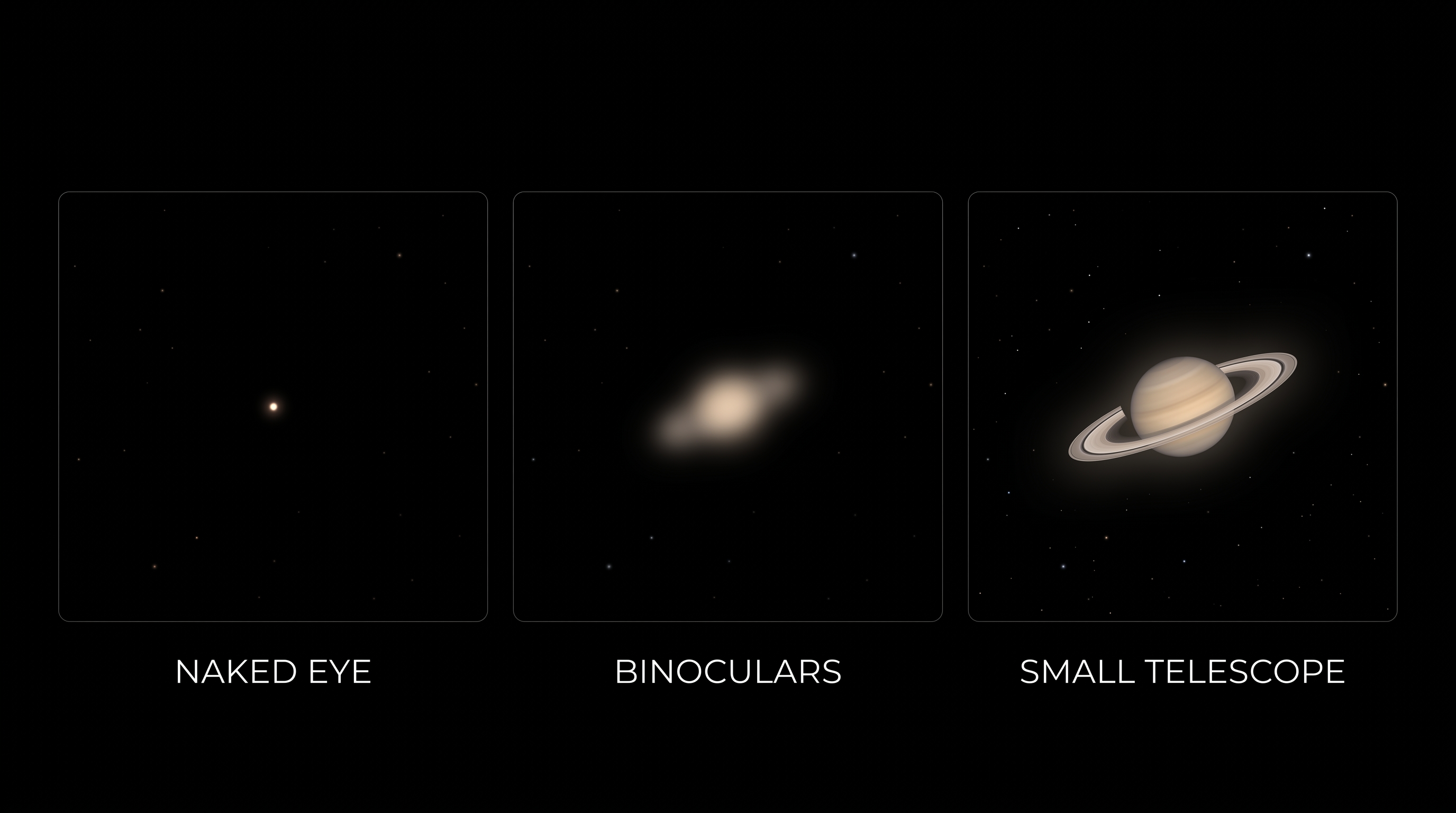
- Naked eye: Saturn is easily visible as a bright, steady point of light. You won’t see the rings themselves, but you will spot the planet without any trouble.
- Binoculars: Saturn starts to look slightly oval rather than perfectly round, a hint that something is there, though the rings won’t be clearly separated from the planet.
- Small telescope (60mm or larger): This is where Saturn transforms. Even an entry-level telescope can clearly separate the rings from the planet’s disk, one of the most rewarding views in all of amateur astronomy.
Best Tips for Viewing Saturn in October 2026
- Aim for a night near opposition, October 4, though the surrounding weeks work well too.
- Wait until Saturn is higher in the sky, closer to midnight, for a steadier, clearer view.
- Avoid nights with poor atmospheric steadiness. Planets often look shaky through a telescope on windy or turbulent nights, so calm, clear conditions matter more than total darkness.
- Let your telescope cool down outside for 15 to 20 minutes before observing, since temperature differences can blur the view.
- Use a star chart app to confirm Saturn’s exact position for that specific night.
What Equipment Do You Really Need?
You don’t need anything expensive to enjoy this. An entry-level telescope in the 60mm to 90mm range is enough to clearly show Saturn’s rings for the first time, and it’s a genuinely magical moment for most beginners.
If you don’t own a telescope yet, binoculars will at least reveal Saturn’s non-round shape, and your naked eye alone will easily show you exactly where to look. Check out our Beginner’s Guide to Stargazing if you’re starting from zero equipment altogether.
Step-by-Step: How to Find Saturn
- Head outside shortly after sunset, once the sky has started to darken.
- Look toward the east, where Saturn will be rising.
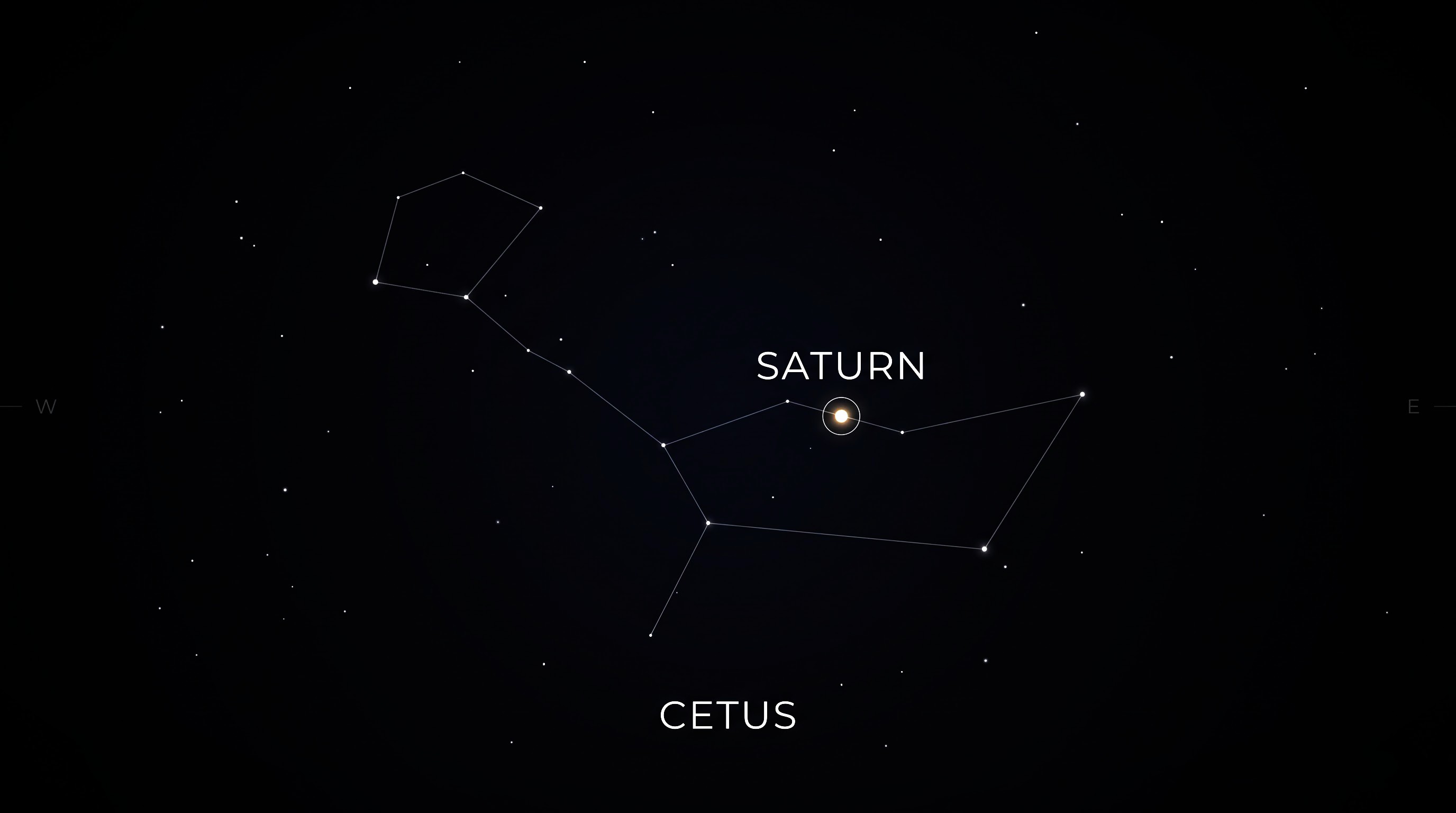
- Locate the constellation Cetus, where Saturn is positioned this season. A stargazing app makes this step effortless.
- Identify the brightest, steadiest point of light in that area. Unlike stars, planets don’t twinkle much.
- If you have a telescope, point it at that steady point and use a low-magnification eyepiece first to locate Saturn, then increase magnification to bring the rings into focus.
- Check back around midnight for Saturn at its highest and clearest point in the sky.
A free app like Stellarium or SkyView (both available on the Play Store and App Store) makes this entire process much easier, just point your phone at the sky and it will identify Saturn for you in real time.
Conclusion: Don’t Miss Saturn’s Comeback
After a year of nearly invisible rings, Saturn is back to looking like Saturn again. With opposition landing on October 4, 2026, and the rings tilted open enough to see clearly, this is one of the easiest and most rewarding planets to observe all year, even with modest equipment.
Grab a telescope if you have one, or start with just your eyes and a free app like Stellarium or SkyView. For more of what’s happening in the sky this season, check out our September 2026 Night Sky Guide and our guide to seeing Neptune at its best, both packed with more easy targets to try alongside Saturn.