Hunter’s Moon 2026: When and Where to See the October Full Moon
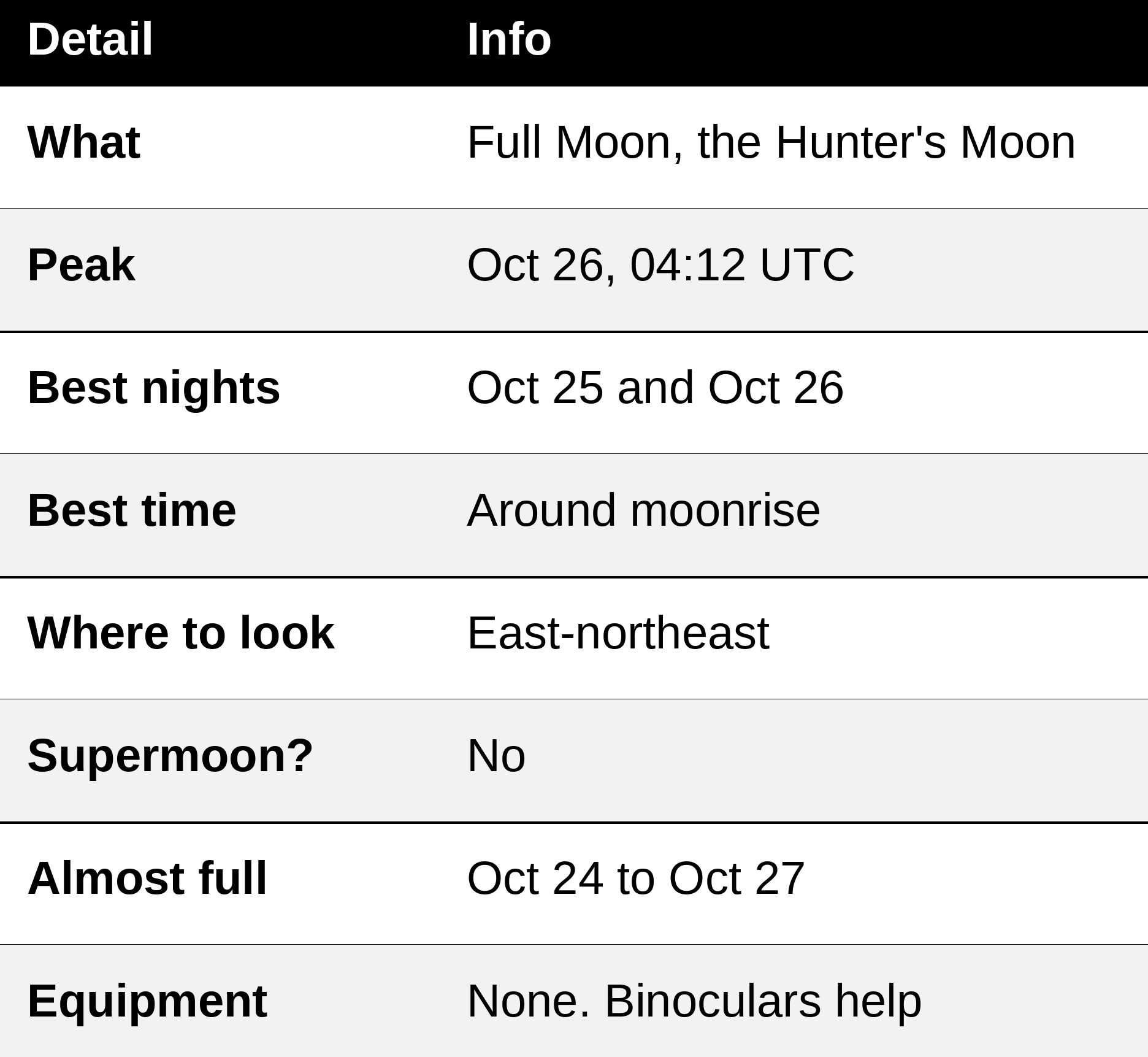
The Hunter’s Moon is full on Oct 26, 2026 at 04:12 UTC. Here is when it rises in your city and why the evenings around it look so alike.
Verdict: Worth stepping outside for, but go for the moonrise, not the exact peak. The Hunter’s Moon is full on Oct 26, 2026 at 04:12 UTC, and the best show is the evening of Oct 25 or Oct 26, when the Moon climbs over the eastern horizon around sunset.
Quick answer
Reality check
- It is not a supermoon. The next supermoon is the November full Moon.
- There is no eclipse this month.
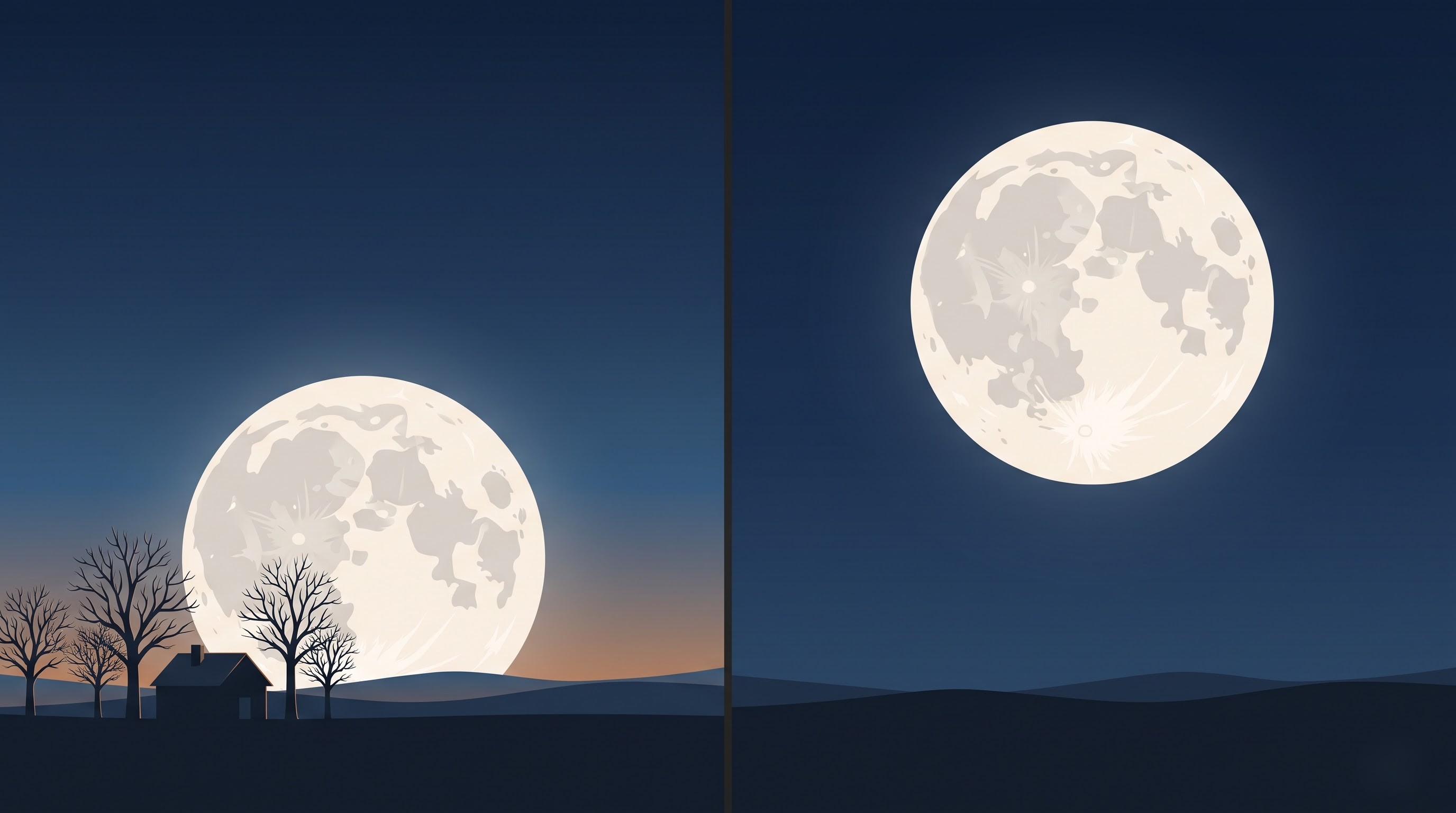
- It is not bigger, brighter or redder than any other full Moon. A Moon near the horizon often looks orange because its light passes through more air, and it looks large because of a trick of the eye called the Moon illusion. Its real size does not change.
- If you only look at the exact peak time, you may miss the best part. For many places that moment is in daylight or the middle of the night.
What is the Hunter’s Moon?
The Hunter’s Moon is the name for the full Moon that follows the Harvest Moon. This year the Harvest Moon was on Sept 26, so the Hunter’s Moon is the October full Moon. The name comes from folklore: autumn was hunting season, and a bright evening Moon helped hunters work after sunset.
If you missed the earlier one, here is our guide to the Harvest Moon 2026.
When and where to look
The Moon looks full from about Oct 24 to Oct 27. The exact full Moon is at 04:12 UTC on Oct 26. In other time zones that is:
- US Eastern: 12:12 am, Oct 26
- US Pacific: 9:12 pm, Oct 25
- UK: 4:12 am, Oct 26
- India: 9:42 am, Oct 26 (daytime)
- Australia (Sydney): 3:12 pm, Oct 26 (daytime)
The table below shows the full Moon time and our calculated moonrise for Oct 26 in a few cities.
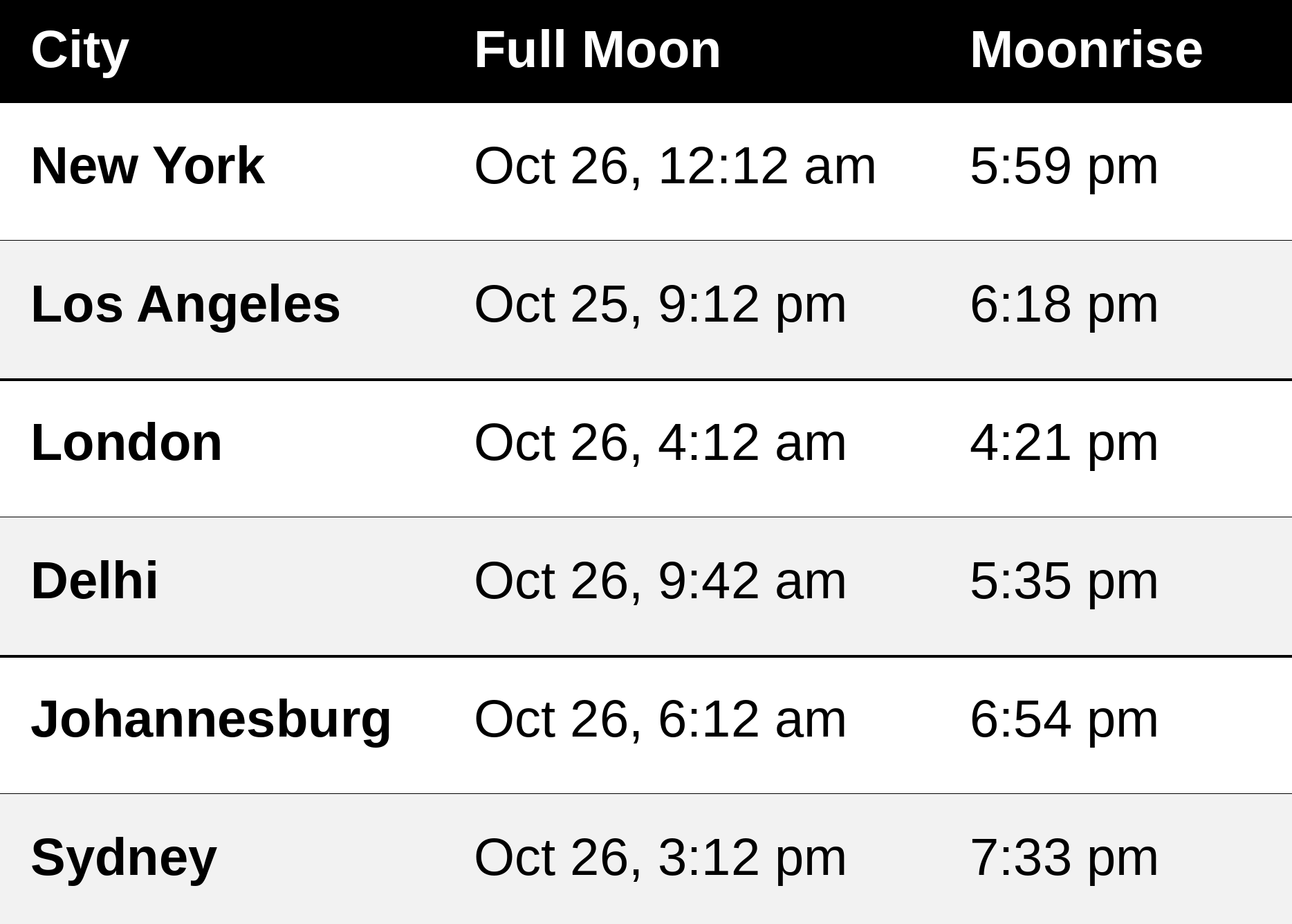
Simple rule of thumb: on Oct 26, the Moon rises within about 35 minutes of sunset in all the cities we checked. So wherever you are, go out around sunset and face east-northeast.
Why the Moon rises at nearly the same time two nights in a row
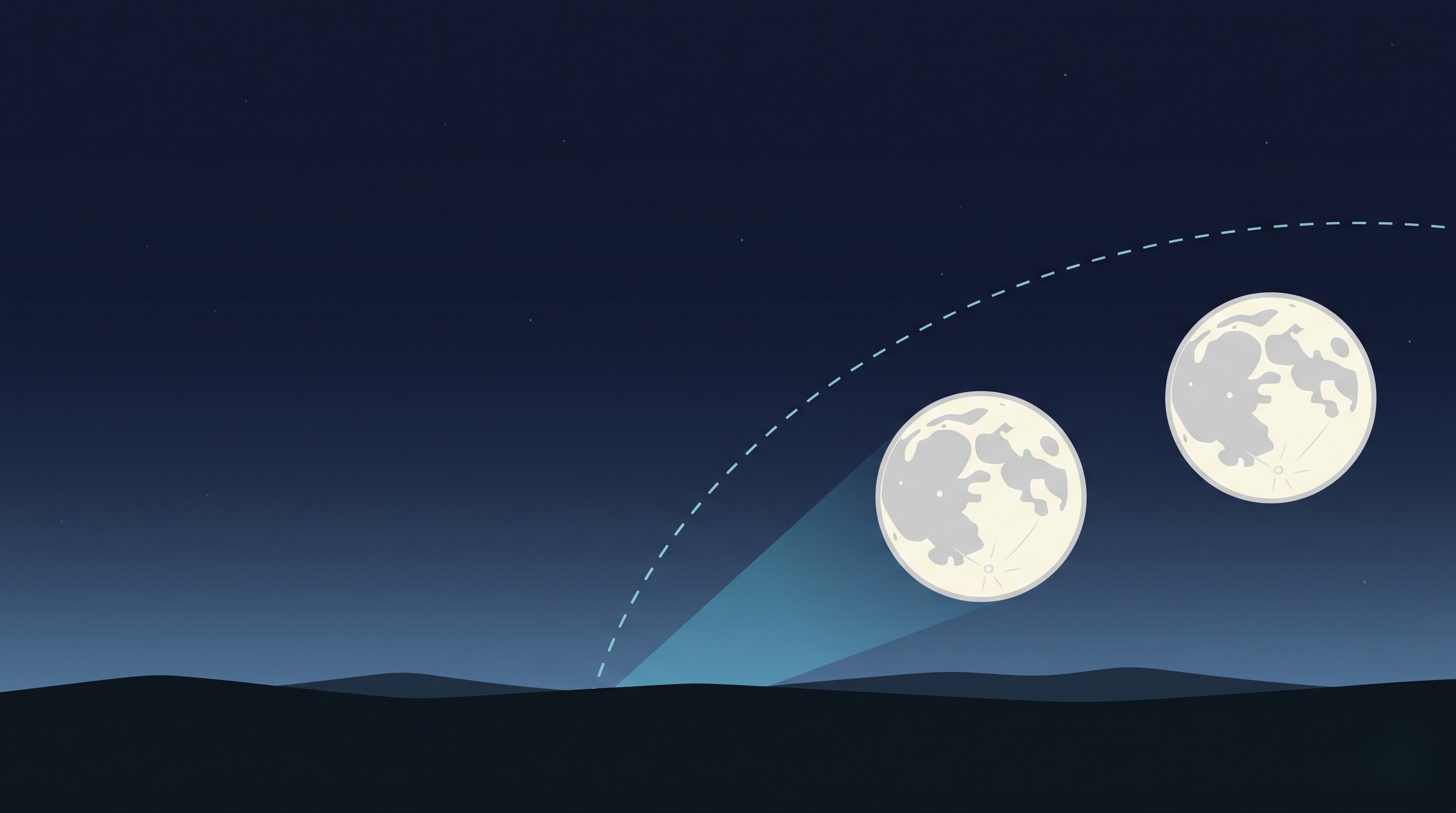
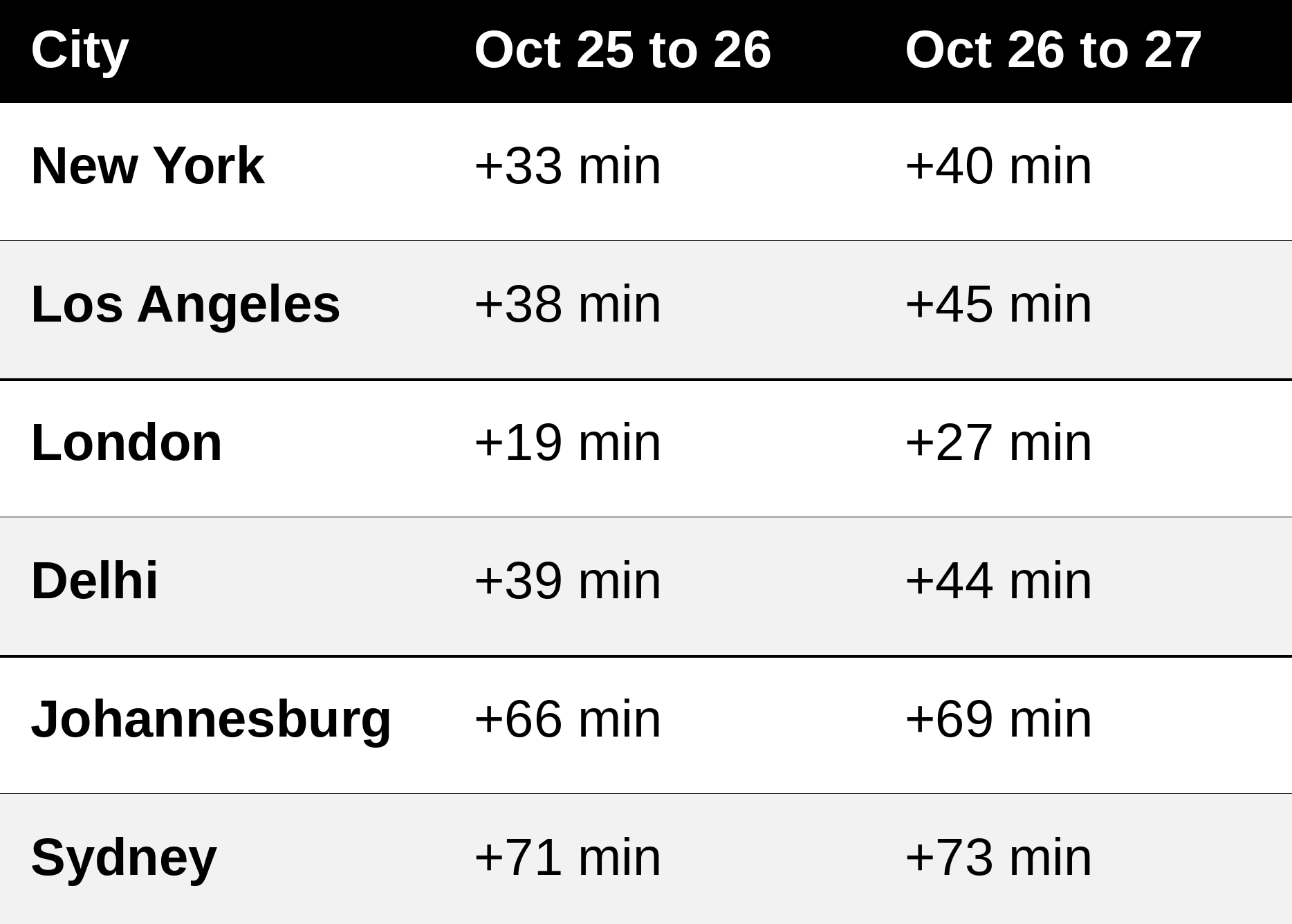
Normally the Moon rises about 50 minutes later each night. Around now, in the Northern Hemisphere, the delay is much shorter, so the Moon appears at a similar time on consecutive evenings. That is the real reason this full Moon is linked to hunters and harvests: more bright evenings in a row.
This is mostly a Northern Hemisphere effect. In London the delay is about 19 to 27 minutes, and in New York about 33 to 40. In Johannesburg and Sydney it is closer to 66 to 73 minutes.
What you will actually see
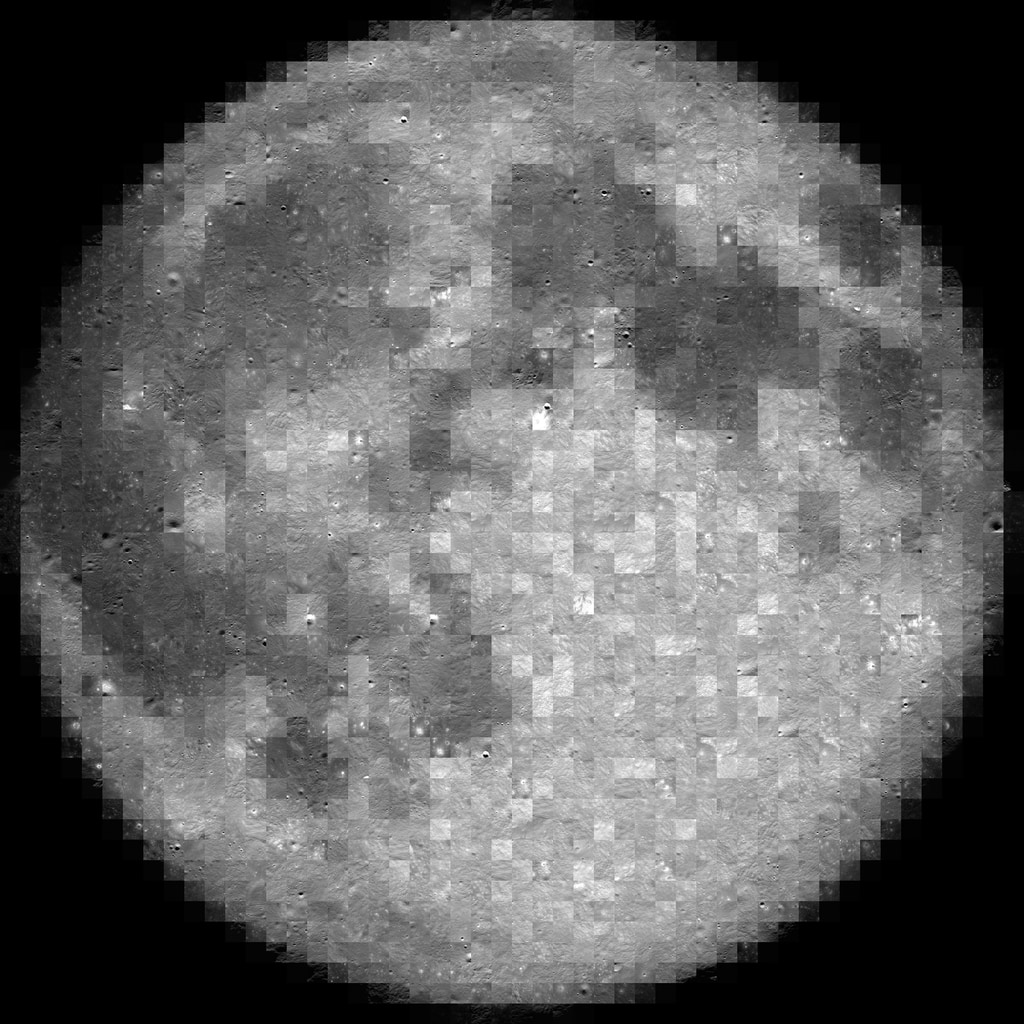
A bright, flat, glaring full Moon. Full Moon light fills in the shadows, so the surface looks less detailed than it does a few days earlier. With the eye alone you can see the dark grey plains. With binoculars you can also see bright rays spreading from some craters.
The Moon sits in Aries, about 4° from the star Sheratan and 7° from Hamal. Moonlight will wash out most stars nearby, so do not expect a pretty star field.
A simple plan
- Check your local moonrise time for Oct 25 and Oct 26.
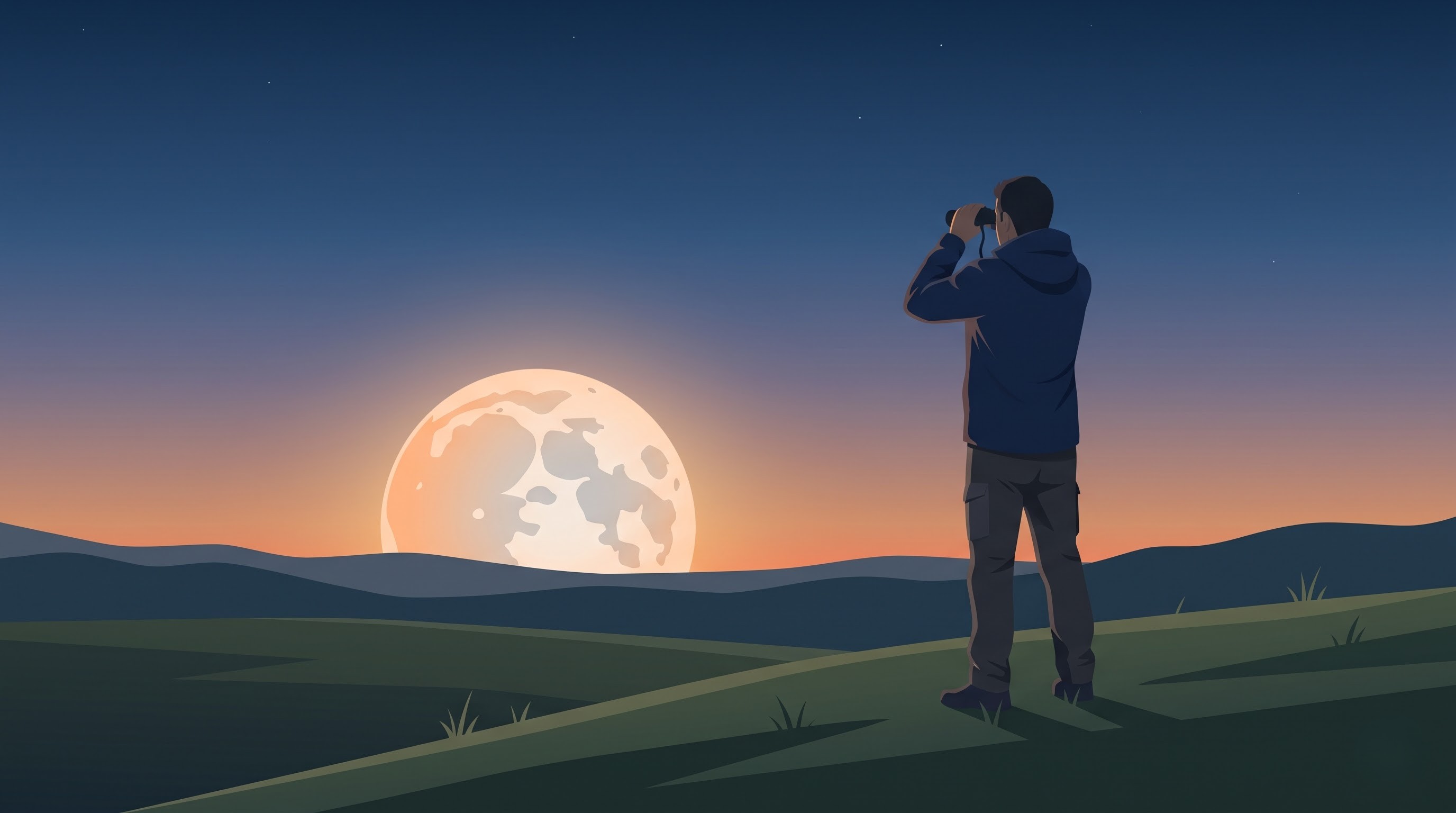
- Find a spot with a clear east-northeast horizon (a hill, a rooftop, an open field).
- Arrive about 20 minutes before the Moonrise time.
- Watch it rise, then look again an hour later and compare the color and size.
- If one night is cloudy, try the other.
Common mistakes: waiting for the exact peak time, looking in the wrong direction, and standing where trees or buildings block the horizon.
Where to go next
Meteors are coming too: the Orionid meteor shower peaks around Oct 21 to 22. For the dark morning sky, see our Jupiter and Mars morning planets guide. Keep track of everything on the Space Events Calendar, and if you are new to this, start with the Beginner’s Guide to Stargazing.
Sources
- Farmers’ Almanac: October Full Hunter’s Moon
- Star Walk: October Full Moon
- TheSkyLive: Full Moon October 2026
- Moongiant: October 2026 Moon phases
- NASA Scientific Visualization Studio: Moon Mosaic
Moonrise and delay times in the tables are our own approximate calculations for city centres. Check a local almanac for your exact spot.